Translate

Showing posts with label separation of Church and State. Show all posts

Thursday, October 9, 2014

Bridging the religious divide


Some critics of the Bangsamoro Basic Law (BBL) now undergoing congressional review and debate are quick to draw attention to what they perceive as an apparent bias or partiality toward one religion over the others. This understandable disapproval tends to gloss over the historical context of the struggle for self-determination of our brother- Muslims in Southern Mindanao.
 
Perhaps this religious-based criticism could also be traced to the emphasis placed by Muslims on religion as the basis of everything. To Muslims, all matters in life, whether governance, justice, culture, social relationships, family, etc., emanate from religion.

President Noynoy Aquino witnesses the turnover of the proposed draft Bangsamoro
Basic Law between Moro Islamic Liberation Front (MILF) peace negotiator Mohagher
Iqbal and Senate President Franklin Drilon.
As the Al Qalam Institute on the Bangsamoro Basic Law of Ateneo de Davao explains: “What is religious is political and conversely, what is political is religious because the two are so intertwined in the life of the Muslims. Therefore, no religious test must be used to assail the autonomy being granted to the Bangsamoro.”
 
Therein lies the controversy. How do we bridge this contradiction between the secular world perspective we have been used to after gaining independence from Spain on one hand, and the Muslim’s belief in the transcendence of religion over all others, on the other?
 
If the principal objective of the BBL is to construct a closed Islamic society or state for its constituents alone, and not for the entire people of Mindanao who are still subject to the secular central and local governments, then what is highly objectionable in this kind of arrangement? It is not Islamic hegemony that is being fostered by the BBL but a type of asymmetric relationship to the constitutionally-recognized national government, where some political powers are devolved upon the new Bangsamoro community, yet it is still subordinate to central governance.
 
Does the integration of the Islam religion with the political and social affairs of the Bangsamoro contradict the inviolability of the separation of Church and state under the Philippine Constitution?
 
A textual exegesis of the Philippine Constitution shows that many concepts enshrined in the document such as justice, peace, equality, freedom, protection of life and property, respect for human rights, the sanctity of family, among others, have their roots in Judeo-Christian religious beliefs. Arguably, such concepts are also accepted and practised by other religions, thus bringing us to the conclusion that Muslims are probably on the correct side of the argument in saying that all matters in life can be traced to one’s religion.
 
What the Constitution clearly proscribes is a situation where the government allows the Church and its leaders in controlling the affairs of the state, e.g., President Aquino asking the Archbishop of Manila to run the government for him. He may personally ask the Cardinal for his prayers but he cannot turn over the government to the clergy. Or inversely, President Aquino declaring the Roman Catholic Church as the country’s national and only church.
 
Similarly, the head of the Bangsamoro government may ask the Imam for spiritual guidance but not surrender the affairs of government to him. The Bangsamoro government is not a theocratic entity like Iran where the Supreme Leader or the Ayatollah controls the government in order to protect the Islamist ideology.
 
There seems nothing wrong in allowing religious traditions, customs and practices of one community to prosper. But it has always been difficult for many to understand and appreciate the impact of the Muslim religion because there is this tendency to attribute all forms of religious violence to Islam.
 
Did we ever question whether the terroristic acts committed by the Islamic State or ISIS are sanctioned by the Qur’an? Rather, we immediately resort to a knee-jerk reaction so typical of many who would equate religious violence with Islam. A case in point is the TV pundit Bill Maher who has argued that Islam is unlike other religions, because to his view, Islam has “too much in common with ISIS.”
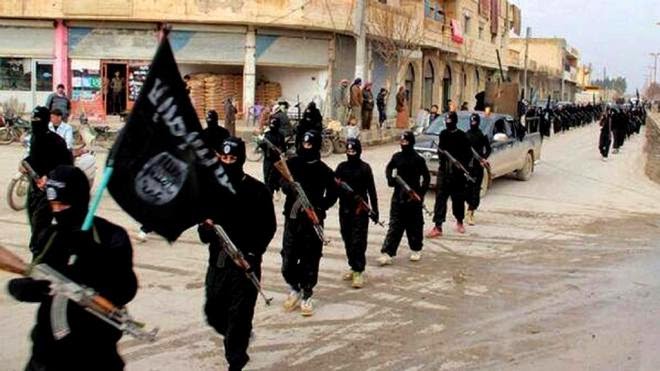
ISIS fighters marching in Raqqa, Syria. AP Photo/Militant Website File.
To most Muslims, and they are more than in the majority, those who commit acts of terror in the name of Islam are not really Muslim. They would distance themselves from extremists in their community, that too often, religious violence is not motivated by religion.
 
The Moro Islamic Liberation Front (MILF) has waged and continued the Moro’s armed resistance against colonization and in redress of their grievances against the central government in Manila. But it was never in the name of religion, or against the dominant Christian religion. There are other factions among the Muslim insurgents who might have used Islam as their inspiration but it is doubtful if their resistance was actually religiously- motivated.
 
Naturally, there are critics of religion who lack the ability to understand religion beyond its absolute and literal interpretations. They would comb the scriptures for examples of savagery and point to extreme patterns of religious bigotry, and to which they can generally ascribe the causes of oppression throughout the world.
 
This religious narrow-mindedness is what is fuelling the general antagonism to Islamic jihad, whether by the few Muslim extremists or the more peace-loving followers of Islam. It is the more heinous, radical and barbaric practices of extremists that get the attention of the news media and this type of coverage tends to band together all Muslims in a one-size-fits-all category. The barbarism of ISIS must be condemned but not to the extent of demonizing all Muslims in general.
 
It would be an unfortunate setback to the MILF and its government partners if the current debate on the proposed BBL is somehow hijacked by the horrors of Islamic extremism exemplified by ISIS. Already we are hearing murmurs on the side that if Congress fails to enact the BBL, it would have catastrophic consequences to the quest for lasting peace and could possibly swell the ranks of dissatisfied Muslim extremists in the South. That would be a great tragedy if the BBL is scuttled due to religious malice, not because of constitutional or other reasonable legal objections to the proposed law.
 
But first it should be clear to Congress that the proposed BBL does not aim to favour and put one religion over another. There should be a religious debate but not necessarily to determine why Islam should be accommodated. The purpose should be to address any misconceptions about Muslims in the South, that they are not the ISIS-garden variety. This exchange should not divide Muslims, Christians and other faith communities.
 
When that religious divide has been bridged, then the debate on the constitutional and other legal issues about the BBL should resume and it is best that these legal issues are settled without amending the Constitution.
 
The news media and the whole of social media should be involved in a robust and public debate on the merits of the BBL. A free and democratic exchange of opinions is important, not a railroading of the proposed BBL in Congress without serious deliberation, for after all both houses of Congress are controlled by the President’s political party that it might give the President and his rabid supporters the idea that a free debate is no longer necessary.
 
Scouring the news media and the various fora on the Internet, it is quite disheartening to notice the lack of a vibrant discussion on the BBL. Stories of the Binays’ alleged illegitimate wealth build-up seem to preoccupy the newspapers and discussions in social media. As the principal proponent of the BBL, President Aquino should be at the forefront of promoting it, but it seems he is either uninterested or simply confident that his majority in Congress will approve the proposed law no matter what.

Tuesday, January 29, 2013

Religion versus freedom of speech


When he was eighteen years old, Filipino patriot Graciano Lopez Jaena wrote a character sketch entitled Fray Botod (Big-Bellied Friar) where he caricatured the typical Spanish friar as abusive, cruel, lazy, independent, greedy and lustful. It earned him the scorn of the Church as friars tried to locate him and give him the punishment they thought he deserved. His brother Doroteo buried the manuscript under their house before it could be searched, saving Graciano from the friars’ wrath. It was Graciano’s first act of protest against the Spanish authorities that led to another until his relatives decided to ship him to Spain so he could continue his medical studies. Barely twenty years old, Graciano would join Marcelo del Pilar, Jose Rizal and others in the Philippine Propaganda movement to fight for reforms in the islands for the next sixteen years of his life.
 
Rizal’s Padre Damaso, the antagonist Franciscan priest in the novel, Noli Me Tangere, who was eventually exposed as Maria Clara’s father towards the end of the story, could easily be Graciano’s Fray Botod. Thus, why Carlos Celdran, on September 30, 2010, dressed in black like the country’s national martyr Rizal, chose to carry a placard bearing Padre Damaso’s name inside the Manila Cathedral to dramatize his protest against the Catholic clergy for their almost fanatical objection to the proposed Reproductive Health (RH) bill in Congress. All Celdran wanted to convey was a simple message: that the Catholic bishops stop meddling in the affairs of the state.
Dressed in black like Jose Rizal, artist Carlos Celdran holds a sign bearing Padre
Damaso's name inside the Manila Cathedral in protest against the Catholic clergy's
opposition to the proposed Reproductive Health Bill in Congress.Click link to view
http://www.youtube.com/watch?v=e5SBnkKURDI, "Punto por Punto: Carlos Celdran,
guilty sa kasong "offending religious feelings."
If this were the Spanish colonial times, Celdran could have long been vanished to Europe or to Toronto where he has gained a more receptive following among expatriate Pinoys for his jaunty and critical one act-travelogue, an interesting mix of humour, wit and satire about the Philippines and the pervasive influence of the Church in present-day politics. But the incident brings out Spanish colonial era déjà vu right from the start, it seems.
 
Under the ambiguous heading of “offending the religious feelings” in Article 133 of the Philippines’ Revised Penal Code, a Metropolitan Trial Court in Manila found Carlos Celdran guilty of performing an act “notoriously offensive to the feelings of the faithful.” This was a little-known and rarely used law, but perhaps not during the Spanish colonial period where there was no separation of Church and State. Celdran could be sentenced to a prison term of not less than two months and 21 days and not more than one year, one month and 11 days.
 
Human rights sympathizers swarmed Facebook and Twitter pages with criticisms of the court’s decision. “This is a setback for free speech in the Philippines, which prides itself on being a democracy,” Human Rights Watch Asia declared as it was alarmed by the use of an “archaic” law to prosecute Celdran.
 
“What? Have you all reverted to being colonialism’s indios?” one blogger posted in Facebook. “Vatican colony,” wrote another.
 
Celdran’s case might have opened a huge trove of anti-Church sentiments, although this is not as straightforward as it may seem. The impugned article in the Penal Code may sound archaic or 16th century vintage, but it is a provision common to many penal codes. Even advanced democracies such as the U.S., England and Canada have a similar provision in their books as a reasonable limitation to free speech. What Celdran’s case certainly has surfaced to our consciousness is the growing conundrum nowadays in balancing the freedom of religion with the right to free speech.
 
In the present Celdran case, we are fortunate that this clash of two basic freedoms is limited to the issues of separation of Church and State and the right of women to reproductive health. In other jurisdictions or states, the simmering conflict is even much more intense, in that the underlying conflict is philosophical, and challenges our presumptions about religion and the right to free speech.
 
There is a current trend, both in Europe as well as in the United States, to give freedom of religion far more importance than it actually deserves. When someone puts an image of Jesus in a glass of urine, is this art? Admittedly, it is utterly tasteless. But it falls completely under freedom of speech.
 
Some Christians are, of course, offended. But they are not burning down art galleries, beheading artists, or killing other Christians to show their dislike. Contrast that with followers of Islam, who would go completely berserk if an artist were to place a copy of the Koran in a jar of urine. They would readily kill any number of people, including their own, to show their fury.
 
To Islamic militants, there is no right to free speech based on their religion’s premises. Rights are principles that specify the kinds of actions a person should be able to take. Islamists contend that if there is no right to “offend God,” then there is no right to free speech. Whether or not we have the right to “offend God” depends on the source and nature of rights. Such is the nature of the current debate ever since the Cartoon Jihad was published. Those from the religious right have come to the defence of the right to free speech while Islamic militants, founding their arguments on their religion, have maintained that there is no right to free speech.
 
Being God’s creatures, people of faith owe an unconditional obedience to his will. The Scriptures are replete with examples of the kind of obedience people ought to show God. Like Islam, both Judaism and Christianity prohibit speech offensive to God, and both call for those who violate this tenet to be put to death. From the Old Testament, for example:
 
“Whoever curses his God shall bear his sin. Whoever blasphemes the name of the LORD shall surely be put to death. All the congregation shall stone him. The sojourner as well as the native, when he blasphemes the Name, shall be put to death.” Leviticus 24:16
 
“If your brother, the son of your mother, or your son or your daughter or the wife you embrace or your friend who is as your own soul entices you secretly, saying, “Let us go and serve other gods,” . . . you shall not yield to him or listen to him, nor shall your eye pity him, nor shall you spare him, nor shall you conceal him. But you shall kill him.” Deuteronomy 13:6–9
 
Most of us would naturally brush aside such passages from the Bible, saying God didn’t really mean those parts. We should thank the Renaissance and the Enlightenment for not taking religion as seriously as did their forebears. We do not stone blasphemers to death anymore or burn them at stake. We just call for censorship or regulation – of television, radio, the press, the Internet, video games and so on, and we are making headway in our efforts to moderate human excesses.
 
Thus, when faced with something like the Cartoon Jihad, we are compelled to blur our statements to accommodate both religious extremes, putting down Muslim images as unacceptable, as with anti-Christian messages, or any other religious belief. What this really means is that individuals have a right to free speech but may not criticize religion.
 
We should be grateful to the Church in the Philippines that we are not yet even at the crossroads of an intellectual battle against religion, as it is abroad and in most countries where Islam is on the rise. Carlos Celdran simply waged a battle against the Catholic clergy for their medieval tendency to obstruct in the affairs of the state. Celdran did not question his faith despite his antics.
 
What exactly did Carlos Celdran perform that was “notoriously offensive to the feelings of the faithful?” He was carrying a sign of Padre Damaso while inside the Manila Cathedral, not during the celebration of mass. Besides, the Manila Cathedral is the usual venue for his one-act travelogue that attracts tourists to his show.
 
At most, since the Manila Cathedral is a private property of the Catholic Church, Celdran should have been accosted and asked to leave the premises or warned that he should be charged with trespassing for disturbing the peace if he did not comply. Sentencing him to spend time in prison is a knee-jerk reaction from a judge who obviously does not understand how to balance the antagonistic relationship between freedom of religion and the right to free speech in this day and age.
 
Both rights to exercise one's religious belief and free speech are fundamental in  a democracy. However, these rights are not absolute but subject to certain necessary and reasonable limitations. For example, you cannot shout “fire” inside a moviehouse to spread panic. Nor practice human sacrifice or allow suicide in order to cause death to others even if your religion calls for it.
 
In a modern society where a free market of ideas is allowed to flourish, there are bound to be opposing views, something is bound to offend someone at anytime. But there can be no real freedom of expression if everyone has immunity from being offended. The dilemma of right of religion versus freedom of speech must be weighed against the harm such exercise brings to society. In Carlos Celdran’s case, the punishment does not the fit the offence.