Translate

Showing posts with label MILF. Show all posts

Thursday, October 9, 2014

Bridging the religious divide


Some critics of the Bangsamoro Basic Law (BBL) now undergoing congressional review and debate are quick to draw attention to what they perceive as an apparent bias or partiality toward one religion over the others. This understandable disapproval tends to gloss over the historical context of the struggle for self-determination of our brother- Muslims in Southern Mindanao.
 
Perhaps this religious-based criticism could also be traced to the emphasis placed by Muslims on religion as the basis of everything. To Muslims, all matters in life, whether governance, justice, culture, social relationships, family, etc., emanate from religion.

President Noynoy Aquino witnesses the turnover of the proposed draft Bangsamoro
Basic Law between Moro Islamic Liberation Front (MILF) peace negotiator Mohagher
Iqbal and Senate President Franklin Drilon.
As the Al Qalam Institute on the Bangsamoro Basic Law of Ateneo de Davao explains: “What is religious is political and conversely, what is political is religious because the two are so intertwined in the life of the Muslims. Therefore, no religious test must be used to assail the autonomy being granted to the Bangsamoro.”
 
Therein lies the controversy. How do we bridge this contradiction between the secular world perspective we have been used to after gaining independence from Spain on one hand, and the Muslim’s belief in the transcendence of religion over all others, on the other?
 
If the principal objective of the BBL is to construct a closed Islamic society or state for its constituents alone, and not for the entire people of Mindanao who are still subject to the secular central and local governments, then what is highly objectionable in this kind of arrangement? It is not Islamic hegemony that is being fostered by the BBL but a type of asymmetric relationship to the constitutionally-recognized national government, where some political powers are devolved upon the new Bangsamoro community, yet it is still subordinate to central governance.
 
Does the integration of the Islam religion with the political and social affairs of the Bangsamoro contradict the inviolability of the separation of Church and state under the Philippine Constitution?
 
A textual exegesis of the Philippine Constitution shows that many concepts enshrined in the document such as justice, peace, equality, freedom, protection of life and property, respect for human rights, the sanctity of family, among others, have their roots in Judeo-Christian religious beliefs. Arguably, such concepts are also accepted and practised by other religions, thus bringing us to the conclusion that Muslims are probably on the correct side of the argument in saying that all matters in life can be traced to one’s religion.
 
What the Constitution clearly proscribes is a situation where the government allows the Church and its leaders in controlling the affairs of the state, e.g., President Aquino asking the Archbishop of Manila to run the government for him. He may personally ask the Cardinal for his prayers but he cannot turn over the government to the clergy. Or inversely, President Aquino declaring the Roman Catholic Church as the country’s national and only church.
 
Similarly, the head of the Bangsamoro government may ask the Imam for spiritual guidance but not surrender the affairs of government to him. The Bangsamoro government is not a theocratic entity like Iran where the Supreme Leader or the Ayatollah controls the government in order to protect the Islamist ideology.
 
There seems nothing wrong in allowing religious traditions, customs and practices of one community to prosper. But it has always been difficult for many to understand and appreciate the impact of the Muslim religion because there is this tendency to attribute all forms of religious violence to Islam.
 
Did we ever question whether the terroristic acts committed by the Islamic State or ISIS are sanctioned by the Qur’an? Rather, we immediately resort to a knee-jerk reaction so typical of many who would equate religious violence with Islam. A case in point is the TV pundit Bill Maher who has argued that Islam is unlike other religions, because to his view, Islam has “too much in common with ISIS.”
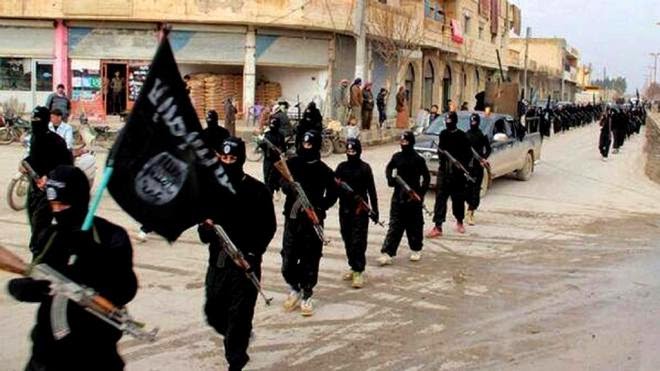
ISIS fighters marching in Raqqa, Syria. AP Photo/Militant Website File.
To most Muslims, and they are more than in the majority, those who commit acts of terror in the name of Islam are not really Muslim. They would distance themselves from extremists in their community, that too often, religious violence is not motivated by religion.
 
The Moro Islamic Liberation Front (MILF) has waged and continued the Moro’s armed resistance against colonization and in redress of their grievances against the central government in Manila. But it was never in the name of religion, or against the dominant Christian religion. There are other factions among the Muslim insurgents who might have used Islam as their inspiration but it is doubtful if their resistance was actually religiously- motivated.
 
Naturally, there are critics of religion who lack the ability to understand religion beyond its absolute and literal interpretations. They would comb the scriptures for examples of savagery and point to extreme patterns of religious bigotry, and to which they can generally ascribe the causes of oppression throughout the world.
 
This religious narrow-mindedness is what is fuelling the general antagonism to Islamic jihad, whether by the few Muslim extremists or the more peace-loving followers of Islam. It is the more heinous, radical and barbaric practices of extremists that get the attention of the news media and this type of coverage tends to band together all Muslims in a one-size-fits-all category. The barbarism of ISIS must be condemned but not to the extent of demonizing all Muslims in general.
 
It would be an unfortunate setback to the MILF and its government partners if the current debate on the proposed BBL is somehow hijacked by the horrors of Islamic extremism exemplified by ISIS. Already we are hearing murmurs on the side that if Congress fails to enact the BBL, it would have catastrophic consequences to the quest for lasting peace and could possibly swell the ranks of dissatisfied Muslim extremists in the South. That would be a great tragedy if the BBL is scuttled due to religious malice, not because of constitutional or other reasonable legal objections to the proposed law.
 
But first it should be clear to Congress that the proposed BBL does not aim to favour and put one religion over another. There should be a religious debate but not necessarily to determine why Islam should be accommodated. The purpose should be to address any misconceptions about Muslims in the South, that they are not the ISIS-garden variety. This exchange should not divide Muslims, Christians and other faith communities.
 
When that religious divide has been bridged, then the debate on the constitutional and other legal issues about the BBL should resume and it is best that these legal issues are settled without amending the Constitution.
 
The news media and the whole of social media should be involved in a robust and public debate on the merits of the BBL. A free and democratic exchange of opinions is important, not a railroading of the proposed BBL in Congress without serious deliberation, for after all both houses of Congress are controlled by the President’s political party that it might give the President and his rabid supporters the idea that a free debate is no longer necessary.
 
Scouring the news media and the various fora on the Internet, it is quite disheartening to notice the lack of a vibrant discussion on the BBL. Stories of the Binays’ alleged illegitimate wealth build-up seem to preoccupy the newspapers and discussions in social media. As the principal proponent of the BBL, President Aquino should be at the forefront of promoting it, but it seems he is either uninterested or simply confident that his majority in Congress will approve the proposed law no matter what.

Thursday, September 25, 2014

Bangsamoro hopes as ISIS looms


According to Mohager Iqbal, chairman of the Bangsamoro Transition Commission, enactment by Congress of the Bangsamoro Basic Law (BBL) would bring to a close the suffering of the Bangsamoro people, foster unity, bring about economic development and end radicalism among Muslims in the Southern Philippines.
 
Citing the recent Scottish referendum in which those against independence from Britain won and Scotland decided to remain under the Union Jack, Iqbal was also confident that the Bangsamoro entity would not rift the country apart but rather unify it. But this could be wishful thinking because at this stage, the new Bangsamoro state is still very much an elusive dream.

Supporters of the Comprehensive Agreement on the Bangsamoro show their
jubilation upon signing of the agreement between the Philippine government
and the MILF peace panels.
Even if the Aquino-controlled Congress could easily steamroll the enactment of the BBL, it is likely to face a constitutional challenge before the Supreme Court, and its ratification by the constituents of the Bangsamoro nation is not expected to be a sure thing. With the growing spectre of the Islamic State in the Middle East (ISIS or ISIL) reportedly having reached Southern Philippines, particularly among the more radical and disenchanted members of the Bangsamoro Islamic Freedom Fighters (BIFF) and the formerly Al Qaeda affiliate, Abu Sayyaf, the urgency of a Bangsamoro state looms even more urgent as the only peaceful alternative to a never-ending insurgency or to the establishment of a dreaded Islamic Caliphate in Mindanao.
 
There are constitutional landmines that the BBL needs to hurdle before Congress can enact the law. Assurances from the government panel that amending the Constitution is not necessary only appear to blindside the obvious constitutional questions. The new Bangsamoro entity envisaged under the BBL will clearly have a wide range of political powers not hitherto delegated or devolved to any other existing political subdivision like a province, city or town. The mere idea of forming a substate or a nation within a bigger nation is inconceivable because the Philippine Constitution does not allow it.
 
Pursuant to the mandate under the current Philippine Constitution, the Autonomous Region in Muslim Mindanao (ARMM) was created on August 1, 1989, through Republic Act No. 6734. The ARRM was officially inaugurated on November 6, 1990, in Cotabato City.
 
President Benigno Aquino III has said that the ARRM experiment was a complete failure because of corruption that plagued the new entity. In repealing the organic act that created the ARRM, the proposed BBL however goes beyond the framework of the current Constitution under Section 15.  For one, the BBL undermines the national sovereignty as well as the territorial integrity of the republic.
 
Although the BBL states that the Bangsamoro territory shall remain part of the Philippines, there are doubts however that it could be a preparation for ultimate secession from the republic. With a different government from the rest of the country based on the parliamentary system, exclusive and concurrent powers with the central government, and a shariah justice system for Muslims only, the BBL looks like a complete and comprehensive template not just for self-government, but for eventual independence.

Map showing the proposed new Bangsamoro territory.
Recall that the concept of a Bangsamoro nation is not the original creation of the peace panel that helped draft the Comprehensive Agreement on the Bangsamoro. Muslims or Moros in Mindanao have long believed they could not identify with the rest of the country, thinking that they do not belong. It has always been their claim that they were a sovereign people before colonization by Western powers, that their integration was forced upon them. It was this lost identity that led to the formation of the Mindanao Independence Movement in Cotabato in 1968, and later embraced by the Moro National Liberation Front (MNLF). This stirring for a separate nationhood is evident in the slogan of The Moro Islamic Liberation Front (MILF) that seceded from the MNLF and is now the major partner of the current administration for the enactment of the BBL: “We are Moros, not Filipinos.”

But if the BBL is the most viable non-violent alternative to Muslim self-determination in the south, then it should be laid out to the front so that the current Philippine Constitution could be appropriately amended to reflect that objective. The current text in the Constitution on the creation of autonomous regions in Muslim Mindanao is obviously insufficient to accommodate a Bangsamoro territory as envisaged by the BBL.
 
The problem with the current Aquino administration is its inability to stay within the parameters of the Constitution as evidenced by the pork barrel allocations and illegal transfers of government funds, and its lack of respect for equal protection under the law when apprehending perpetrators of corruption. The notion that the state can just suspend the fundamental rights of individuals by detaining them without trial reeks of injustice and offends the rule of law.
 
President Aquino and Congress should not cut corners in enacting a law that promises so much for our Muslim brothers in the south. In these crucial times when Western powers are being tested by a nascent and more extreme form of Muslim radicalism, one serious misstep like an error in constitutional judgment can foment and provoke choosing violence as the only available option for self-government.
 
The history of the Muslim struggle for self-government antedates the Philippines’ own independence movement against the Spanish and American colonizers. In the 1950s, the Kamlon uprising reminded us that the Moro rebellion has not been finished after the Philippines became independent from the United States in 1946. Beginning in the 1970s, secession had become the battlecry of the Moros of Mindanao. The MNLF waged a three-decade war against the central government until it accepted political autonomy under the 1996 peace agreement. But that didn’t last long and the MILF seceded from the MNLF which also spawned other disenchanted and more radical factions of the Muslim secessionist movement.
 
The Comprehensive Agreement on the Bangsamoro between the MILF and the present government probably has the best chance of achieving the lasting peace that has eluded all previous attempts toward a negotiated settlement of the Muslim problem. But if the government of President Aquino fails to deliver the Bangsamoro state to the MILF, what could be the last option for the Muslim rebels but embrace the more radical jihad of the Islamic State. They would seem better off to continue fighting for their own independence since that would ensure loyalty to their Islamic traditional beliefs, whether they follow the revivalist practices of Wahhabism espoused by Saudi Arabia or the extremism of Al Qaeda or of the ISIS.
 
Fixing the constitutional shortcomings of the BBL is not the only problem the government must do to satisfy the MILF. Conducting the plebiscite to get the ratification of the BBL is in itself a huge challenge. The proposed law is a voluminous text for the constituents of the Bangsamoro territory to digest and understand before they can make up their minds whether to ratify the law. The plebiscite is not just going to be like a referendum on sovereignty where a simple question that can be answered by a yes or no would suffice.
 
An example of a question which needs to be asked is how would the separability clause in the BBL be implemented in the event that some provisions of the BBL are rejected. How would that influence the entire law, or should it be allowed to stand despite some paragraphs being struck down?
 
If the constitutional objections to the BBL are cleaned up, the promise of the Bangsamoro state is an ambitious undertaking that could either break or make the Aquino administration. Previous presidents have failed, yet this current president who is perceived to be without a strong character but with the moral certitude bigger than the sum of his personality, could possibly emerge as a champion for the Muslim minority in the South if he knows how to play his cards correctly.

Thursday, April 3, 2014

Negotiating in bad faith


In his novel, The Dogs of War (1974), Frederick Forsyth wrote about a group of mercenary soldiers hired to depose a fictional government in Africa. Forsyth called this group the dogs of war, much like the wild pack of soldiers Shakespeare referred to in his play, Julius Caesar.
 
But when the Philippine military named the two dogs and a cat they took into custody during the recent arrest of two high-ranking members of the Communist Party of the Philippines (CPP) as “Ben,” “Wilma” and “Joma,” obviously after the top leaders of the Communist movement, it was a cheap shot, an unfair and malicious attack against their prized captives. On other hand, Forsyth’s dogs of war could probably aptly describe the military like a wild bunch unleashed to pounce on their hated adversaries.
Top leaders of the Communist Party of the Philippines, Benito Tiamzon and his
wife Wilma Austria raise their fists in defiance on their way to their hastily
arranged inquest in Manila after being arrested in Cebu last March 22.
The military also mockingly announced that the well-groomed pets owned by the captured Communist leaders, Benito Tiamzon and Wilma Austria, were better fed than the soldiers in the army whose monthly combat salary wasn’t even sufficient to pay for the pets’ food. Perhaps, the military was sending a hidden message to let the government hear that they are not being taken cared of unlike the Tiamzons’ pets.
 
We can excuse Forsyth in describing his villains as dogs of war since he was only writing a fictional tale. On the other hand, the military had no valid excuse to be insensitive and thoughtless in naming their hostages after their owners. The military’s insensitivity is not just to their prisoners, but to dogs and cats in general, who also have feelings and in fact are more sensitive than people realize.
 
Dogs are very sensitive souls, and if only they could communicate like human beings, they could have let those soldiers know how they felt. Not because they were named after their owners, but it’s just that naming pets is not something to treat like a joke, especially one that is made in poor taste.
 
No species has developed a closer relationship with humanity than the dog, or the cat. We name our pets when we’re prepared to adopt them, to bring them to our homes to become part of our families like our own children. Not to name them in order to poke fun at their owners. These soldiers do not understand what it is about dogs that allows them to live at ease with people.
 
Not so many people really know who the Tiamzons are in person. Just because they were Communists and have lived in the shadows for almost four decades, many who believe the alternative to Communism is far superior think it is perfectly all right to treat the Tiamzons like animals, or even worse than criminals. But it is their affection for dogs and cats that separates them from most of the worst among us who cannot appreciate that such animals also have feelings and rights like people.
 
It is this cavalier attitude of the military and the government that makes the so-called peace negotiations with the rebels really a joke, a process that is wrought from the start with insincerity and lack of genuineness of purpose in achieving the goal of lasting peace. It makes the Joint Agreement on Safety and Immunity Guarantees (JASIG) issued by the government to the rebel participants an ineffectual document of safe passage. Because the government believes they unilaterally impose the JASIG guarantees, that at any time the government wishes to suspend the JASIG’s effect, they can always round up and detain the rebel leaders.
 
Before the capture of Benny Tiamzon and Wilma Austria, other consultants of the CPP and the National Democratic Front (NDF) were also snatched by the military on the pretext that the JASIG has lost its effect because of the impasse in the negotiations.
 
Yet the JASIG guarantees were the product of an agreement, therefore, they can be suspended only if both parties also agreed to do so. But not in the present case. It was only the government who decided on its own irrespective of the other party that the JASIG guarantees are no longer operative since the negotiations were stalled.
 
According to Davao City Mayor Rodrigo Duterte, former head of the government peace panel, Benito Tiamzon and Wilma Austria should be released if they were carrying genuine immunity papers during their arrest. Duterte added that the government should honour its commitment under the JASIG.
 
Under the JASIG, all rebels duly accredited as participants in the negotiations either directly or as consultants are guaranteed free and unhindered passage in all areas in the Philippines. JASIG’s protection covers immunity from surveillance, harassment, search, arrest, detention, prosecution and interrogations or any other similar punitive actions due to involvement or participation in the peace negotiations.
 
JASIG’s immunity is considered necessary in facilitating the peace negotiations between the government and the rebel group because it helps create and sustain an environment conducive to peace talks. It also attracted the Royal Norwegian Government to act as facilitator because of the JASIG guarantees. JASIG further enhances political stability in the Philippines and the government’s peaceful approach towards local insurgency, and this process is made known to the global community.
 
But when the Philippine government asserts that the JASIG guarantees are suspended due to the impasse in the negotiations, it was making a unilateral decision that has not been agreed by the parties. Besides, the process was never concluded nor deemed terminated. It must also be considered that the JASIG guarantees were the most contentious and toughest to negotiate because they covered essentially the procedural agreements between the parties before they could really commence the negotiations. To say, then, that JASIG has been suspended is in bad faith and without the agreement of the other party.


The arrest of Tiamzon and Austria and the other NDF consultants before them despite their JASIG accreditation, however, signals a clear indication that repression of the 45-year old insurgency continues and it is going on with impunity.
 
Recently, the Philippine Supreme Court has ordered the trial with dispatch of the trumped-up murder charges against former Bayan Muna party-list Rep. Satur Ocampo and CPP-NDF consultants in the peace negotiations Randall Echanis, Rafael Baylosis and Vicente Ladlad in connection with the mass graves discovered in Leyte eight years ago. The mass graves discovered by the Philippine Army were said to contain the remains of individuals believed to be victims of “Operation Venereal Disease” launched by the CPP-NDF’s armed wing, the New People’s Army (NPA), to purge their ranks of suspected military informers and collaborators which happened 23 years ago.
 
Also early this week, the Philippine military reported the mass surrender of NPA supporters from Cagayan de Oro City to the army’s 14th Infantry Division, said surrenderees included civilians and children. Using a hoax surrender by the NPA is a patented pys-war tactic by the Philippine military to flush out other insurgents from their mass base and one of the biggest sources of corruption for AFP field commanders in pocketing the reward money from the government’s Social Integration Program for firearms surrendered.
 
Now the government panel is announcing plans to resume the peace negotiations with the Communist rebel group, but insisting that they are willing to negotiate only with CPP leaders based in the Philippines, and not with their counterparts in Utrecht in Netherlands.
 
Where is good faith and trust in the negotiations when at the same time the government is rounding up and detaining the rebel forces? Immunity from arrest was the purpose for installing the JASIG guarantees in the first place but the government apparently respects the agreement only when it works to their advantage.
 
Obviously the government treats the Muslim rebel forces under the Moro Islamic Liberation Front (MILF) quite differently from the CPP-NDF and other Muslim factions. The pivotal role of Malaysian Prime Minister Najib Razak in facilitating the negotiations between the government and the MILF has been hailed and credited with the adoption of the Comprehensive Agreement on the Bangsamoro (CAB).
 
It should be recalled that the father of the current Prime Minister of Malaysia, Tun Haji Abdul Razak bin Haji Dato’ Hussein, was also Malaysia’s prime minister from 1970 to 1976. It was also common knowledge during that time that he supported the Muslim insurgency under the Moro National Liberation Front (MNLF) by providing the rebels with arms, training and funds. The support of the former Malaysian PM was conditional on the Muslim insurgents preventing the government in Manila from pursuing its Sabah claim.
 
With the change in the leadership of the Muslim insurgency, the current Malaysian Prime Minister shifted his support to the MILF and he became the chief facilitator of the Bangsamoro framework agreement.
 
Would the motive for the current Malaysian Prime Minister’s involvement in bringing the Philippine government and the MILF to the table be the same as his father’s?
 
In both peace negotiations by the government with the MILF and the CPP-NDF, it is crystal clear that the government is hiding its true intentions. Acquiescing to the integrity of Malaysia’s territorial right over Sabah and using JASIG as a pretext for rounding up Communist rebels are now surfacing as the real motivation for the government and not the genuine pursuit for lasting peace.
 
Perhaps, the current government can learn something from dogs and their sensitivity to social cues from people that enables them to fit with human society. Humans often fail to realize the unusual skills of dogs in communicating with their masters. But it’s not just their skills but their sense of loyalty which counts most. That is why dogs are our most trusted friends. Dogs know how to build and foster trust, which seems sorely lacking among humans. If only the military and the government could treat dogs in a better light.

Thursday, March 14, 2013

Southern discomfort


Last October 15, 2012, Philippine President Benigno Aquino III and Malaysian Prime Minister Najib Razak were all smiles as they posed for posterity with members of the peace panels for the Philippine government and the Moro Islamic Liberation Front (MILF) who had just signed their framework agreement for peace. Hopes were high that finally peace would be within reach after so many years of fighting with the adoption of an historic agreement laying the framework for a new Muslim autonomous region to be called Bangsamoro.
President Benigno Aquino III does his "noynoying" on the recent Sabah
standoff. Photo courtesy of The Tribune Editorial cartoon. Click link
http://www.youtube.com/watch?v=32WKHztMo04 to view President
Aquino's Press Conference  on the Sabah Issue.
President Aquino was relying on the Bangsamoro framework agreement as the lasting legacy of his presidency, a grand peace initiative that has eluded his predecessors. A major achievement, more significant probably than anything else like his symbolic campaign against corruption. Likewise, Malaysian PM Razak was optimistic that his high-profile role as broker for peace would clinch his re-election in the coming Malaysian elections. It was friendship and cooperation, both symbolic and statesman-like, between the two leaders that would have cast them as rising leaders of the Southeast Asian nations.
 
Everything was going according to plan until the Sabah standoff. Who would have thought the old claim of the Sultan of Sulu over Sabah was like a posterior itch that wouldn’t go away? What about the Malaysian PM’s brokering for peace, was he really sincere in bringing the warring parties to an agreement or simply taking advantage of the opportunity to score points for his re-election? And how about the unmasking of President Aquino’s lack of leadership during the crisis and his inability to protect his own people?
 
Even if the Malaysian military is able to comb out all the supporters of the Sultan of Sulu in Sabah, all dead rather than alive by their preference, this will still be a great debacle for the Malaysian PM that could cost him his re-election. President Aquino, for his initial subservient position to Malaysia’s stand and rebuke of the Sultan’s armed incursion into our neighbour’s backyard, would always be painted by many as the one president who gave up his own people to the wolves. No matter how one looks at this crisis, both leaders would find it very difficult to escape the wrath of their respective citizens.
 
Malaysia is reported to be deporting close to 800,000 Filipinos from Sabah, all Muslims and former residents of Sulu and Tawi-Tawi who have originally escaped from the internecine war between the Philippine military and Muslim insurgents in Mindanao. Most of these Filipinos now possess citizenship cards which were granted by former Malaysian Prime Minister Mohammad Mahathir in an alleged effort to secure political domination of the state by using immigrant votes.
 
A royal commission was established by the Malaysian federal government to investigate illegal immigration in Sabah which could have accounted for the surge in its population. The recent military confrontation between Malaysia and the Sultan of Sulu’s army may hamper this investigation or facilitate the deportation of Filipino Muslims from Sabah as they now appear to be returning to Sulu and Tawi-Tawi by the hundreds daily. This could also seriously spoil the re-election of the current Malaysian Prime Minister Najib Tun Razak as he faces strong criticism for his government’s handling of the Sabah stand-off and the manner of exodus of Muslim Filipinos.
 
President Benigno Aquino III might be the biggest loser from this Sabah bloodbath. His hands have been tied by his friendship with the Malaysian PM for helping the Philippine government broker a peace agreement with the Moro Islamic Liberation Front (MILF). Aquino’s initial pronouncements on the Sabah conflict were all carefully crafted to support the actions of the Malaysian government against the Sultan of Sulu’s army. Even as the sultan’s soldiers were getting annihilated, all Aquino could muster to do was berate the sultan like a child and order him to withdraw his troops. Aquino even threatened to extradite the sultan to Malaysia with whom the Philippines does not have an extradition treaty. Instead of resorting to diplomacy in order to negotiate a ceasefire and possibly a face-saving pull-out of the sultan’s army, Aquino opted to let Malaysia handle the situation unilaterally even if it meant killing all the sultan’s soldiers.
 
Allowing your own people to get massacred, is this the kind of statesmanship expected of a president? Especially, when your people are up in arms in order to redress an arguably legitimate grievance.
 
Nobody expected President Aquino to embrace the sultan’s war, but when the situation has deteriorated to a crisis of humanitarian proportions, the better angels of our human nature dictate that we summon everything possible to save lives. We rally to the side of humanity, for saving lives is more important than any military victory at the expense of loss of human lives. We don’t keep denigrating the sultan’s decision to send his army however senseless it was when our Muslim brothers are getting killed. Or we don’t write opinion columns like Conrado de Quiros who keeps on describing the sultan’s military misadventure as idiotic, foolish and an utter waste. De Quiros continues to call the sultan’s incursion in Sabah as tragic and farcical in order to absolve President Aquino of any culpability for not doing anything during the crisis.
 
The Sultan of Sulu had always been victimized by a history of deception and trickery by colonial powers. In July 1878, Spain entered into a Treaty of Peace with the sultan which allowed them to set up a small garrison in the town of Jolo. Under the said treaty, the sultan would retain his rule outside the walls of the Spanish garrison. But that kind of protectorate relationship would be exploited by Spain in ceding the Philippine Islands to the United States in the Treaty of Paris in 1898, which included the Sulu islands and territories in Mindanao which had never been in full Spanish control. The sultan thought that the agreement with the Spaniards was similar to the one he signed six months earlier with the British North Borneo Chartered Company, which paid him $5,000 annually for the use of his North Borneo territories (now Sabah). This is now the same lease agreement being invoked by the present Sultan of Sulu in reviving its claim over Sabah.
 
Students from the University of the Philippines in Diliman, Quezon City rally
for peace in Sabah, Borneo. Photo Aaron Favila/AP.
After their defeat by the U.S., the Spaniards turned over a garrison on the island of Siasi, southwest of Jolo, to the sultan. It was not until May 1899 that the U.S. troops took over the Spanish fort in Jolo. The Americans had not been able to get troops to Jolo sooner because they could not afford to send any troops outside of Luzon where they had been locked in a fierce battle with Filipino insurgents.
 
When the Americans arrived in Jolo, they told Jamalul Kiram II, the sultan of Sulu, that the U.S. had taken over the islands from Spain. They asked the sultan to recognize the U.S. and honour the 1878 provisions of the treaty which the sultan had signed with Spain. But the sultan refused, stating that the U.S. was a different entity and that the U.S. should enter into a new treaty with the Sultanate.
 
So the Americans negotiated the Bates Treaty of 1899 with the Sultan of Sulu, which turned out to be a classic example of American deception and how to use treaties in disingenuous ways. The Bates Treaty granted some degree of autonomy and protection to the Sulu Sultanate, effectively keeping them out of the Philippine-American War which was peaking in Luzon at that time. But once that war had ended, the terms of the Bates Treaty were broken which the United States considered an impediment to their colonial administration. American troops moved to bring the Moro territories under American military control, leading to the Moro War which would last for thirteen years, making it the longest war in U.S. history.
 
It was the wording relating to American sovereignty in the Bates Treaty and a critical error in its translation that the U.S. capitalized on in incorporating the Sulu archipelago into the new Philippine republic in 1946 when it granted independence to the Philippines. Thus, the Bates Treaty was in effect the first step towards the dissolution of Muslim sovereignty and the dismantling of the Sulu Sultanate.
 
History seems to repeat itself with the present Philippine government under President Aquino doing a Bates Treaty déjà vu. In entering into a peace agreement with the MILF for a new Bangsamoro nation, the government is effectively bringing the Sulu Sultanate to a final closure. The proposed Bangsamoro substate will be the new Muslim domain, all the lands to be incorporated in this new territory will all be subject to the Bangsamoro government; the Sulu Sultanate and all the lands under its former realm will be part of this new substate, thus reducing the southern Muslim kingdom to a mere historical footnote.
 
Maybe this is the primary reason behind the sultan’s military foray in Sabah, to let President Aquino and the rest of the Muslim world in the South know that the Sulu Sultanate will not allow any new government such as the proposed Bangsamoro to simply ignore them as if they never existed. History is on the side of the Sultanate of Sulu which has antedated even the Republic of the Philippines, or its colonial governments under Spain and the United States. If this is the case, then President Aquino has dug a very deep hole. The government’s peace accord with the MILF is in serious trouble, and the peace-building initiative in Mindanao that has proved so elusive in the past will have suffered yet another major setback.

Friday, October 19, 2012

Farewell to arms


There is a popular expression in Muslim Mindanao that a Moro would rather sleep with his rifle than with his wife. You would think that’s a joke. But the bigger joke is what the recently signed Framework Agreement on the Bangsamoro would try to accomplish, which according to some observers, including the government panel, is to ultimately disarm the Moro Islamic Liberation Front (MILF).
 
Disarming the MILF or decommissioning its forces is envisaged in the Framework Agreement. This could happen at the tail end of the peace process or sometime during the normalization process, a fact that is totally unknown to the negotiating parties. Under the Framework agreement, the decommissioning of its forces will be undertaken by the MILF on a graduated program. Thereafter, all law enforcement functions will be transferred from the Armed Forces of the Philippines (AFP) to the Bangsamoro police force.
Renegade Bangsamoro Islamic Freedom Fighters (BIFF) vow to continue their
armed uprising despite the peace agreement between the government and the
Moro Islamic Liberation Front (MILF).Click link to to view "Philippine rebels
vow to fight" and Al Jazeera interview with BIFF leader Ameril Umbrakato,
 http://www.youtube.com/watch?v=SEDJuecCL34&feature=related
In other words, there is nothing in the Framework Agreement that requires the Bangsamoro forces to surrender their arms to the government. What the Framework Agreement hopes to accomplish is to put the military forces and arsenal of the Bangsamoro army beyond its present use, i.e., all militia and firearms will be used for peacekeeping or policing purposes and not for the furtherance of military or combat objectives. This means the MILF will be recognized both as a police force and as a regular army in the Philippines.
 
In any state of belligerence, the disarming of the other side, normally the losing side of the conflict is never an easy task. Total disarmament may not be achieved since there would always be those who could hold on to their weapons and continue their resistance even as small brigands. Carl von Clausewitz in his seminal book, On War, wrote that many treaties have been concluded before one of the antagonists could be called powerless, or the balance of power has been seriously altered. In this case, it is always the victors who determine the conditions for surrender and the laying down of weapons.
 
But how much more difficult is it to achieve disarming an army when neither side of the conflict can claim victory? The Framework Agreement is being acclaimed as a road to peace, not an agreement to declare the final cessation of hostilities. We’re still a long way from there.
  
One of the many obstacles to the achievement of peace in Mindanao, not to mention the obvious legal hurdles to the formation of a Bangsamoro juridical entity, is the question of decommissioning the Bangsamoro army. Since the MILF has an equal right to determine the final terms and conditions of peace, it may insist on its army and followers to hold on to their weapons. The MILF, especially its rank and file soldiers, understands that giving up their weapons could be synonymous to giving up their struggle for self-determination.
 
The history of peace negotiations with the Philippine government is replete with instances of betrayal. Luis Taruc of the Hukbalahap and his fellow rebels, who decided to leave their armed struggle to join the Democratic Alliance in Congress during the third republic under Manuel Roxas, found their quest for parliamentary changes crushed when they were not allowed to take their elected seats. Exactly the same would be repeated during the Quirino administration when the Huks surrendered their arms in exchange for amnesty. The government accused the Huks of not presenting all their arms while the latter accused the government of bad faith.
 
Already, the Bangsamoro Islamic Freedom Fighters (BIFF), a breakaway group from the MILF, had announced that they would not recognize the peace accord between the MILF and the government. To them, the peace agreement is surrender and they vowed not to waver from their armed struggle towards a separate Muslim homeland. This declaration of continuing resistance is a realistic roadblock to disbanding the MILF army.
 
Accept it or not, most MILF jihadists are hoping peace doesn’t come.
 
An MILF jihadist posted on the Internet the concerns of a Moro fighter named Abdullah. A young man in his early 20s, Abdullah is a veteran of many jungle battles and he says he is ready to die for the cause of a separate Bangsamoro nation while he clutches a rusty M-60 machine gun.
 
Abdullah says, “I sleep with my machine gun and never go anywhere without it. I cannot part with my weapon.” He said he is not prepared to lay down his weapon even if a final peace deal is signed. “It’s not in my blood to be a farmer,” he said.
 
The veteran Filipino journalist, Emil Jurado, wrote that “many Muslims believe that power emanates from the barrel of a gun. From childhood, they are taught how to handle a gun—it protects them from rival clans. Clan wars in Muslim Mindanao are a way of life.”
 
Perhaps, that’s the primary reason why the Americans tried to neutralize the Muslims in Mindanao after the Spaniards failed to subjugate them. The Americans started their pacification of Mindanao by giving concessions to the Sultan of Jolo, such as allowing the Sultan to collect customs duties in places not occupied by the Americans, paying the Sultan and his leading datus monthly salaries, and not interfering with religious matters. Nonetheless, the Muslims in Mindanao have never been colonized by the Spaniards, the Americans and the Japanese.
 
What does the present Aquino government promise the MILF leaders that this time, the Framework Agreement will work? Does President Aquino think that it is enough to allow the MILF insurgents to form a political party and run in democratic elections so they can have the chance at leading the proposed autonomous region?
 
President Aquino is said to be seriously considering the idea of getting the Muslim rebels to surrender their guns in exchange for cash. Aquino believes this will extend livelihood benefits to the MILF. MILF members who voluntarily disarm themselves by turning their firearms will be included in the government list of beneficiaries of a livelihood assistance program.
 
President Aquino, however, refuses to call his proposal as buying of MILF firearms. He insists that it is a process of providing benefits to the rebels who will voluntarily surrender their weapons. But no matter how one looks at the President’s proposal, it is still exchanging cash for guns. The only problem with this idea is it has been tried in the past and it did not work.
 
It reminds me of Toronto’s Pixel for Pistols, when the city police tried to attract those who have handguns to turn them in for a Nikon camera. Or Saudi Arabia’s deradicalization program for jihadists that includes material inducements like giving thousands of dollars to pamper its graduates, or paying for weddings, furniture or a new Toyota. One thing they have in common: both were failures.
 
The right to bear arms by Muslims could be likened to the Second Amendment to the United States Constitution that protects the right of the people to keep and bear arms. When the Philippines was formulating its Constitution in 1935 for the Commonwealth government which was to be a transition government before independence, the United States made sure that the right to bear arms would not be included in the bill of rights that was copied from the U.S. Constitution. The fear of the U.S. was that giving the same right to bear arms to Filipinos would enable them to form their militias that could rebel and overrun the U.S. colonial government.
 
Although the Muslims in Mindanao were never pacified and conquered by the Americans and the ensuing independent Philippine government, their relationship with weapons has long been an integral part of their history and culture. Much deeper than their right to bear arms is their fundamental right to be free in running their own government, free from colonizers or from the central government in Manila.
 
Disarming the MILF or the Muslim in general might take more than a Framework Agreement for peace. The Framework Agreement stipulates that “It is through normalization that communities can return to conditions where they can achieve their desired quality of life, which includes the pursuit of sustainable livelihoods and political participation within a peaceful deliberative society.” If this particular paragraph of the Framework Agreement means that all Muslims must give up their arms in order to achieve normalization, no Muslim in his or her right mind would give up now what they have been fighting for decades or even for more than a century.
 
If the national government is willing to cede local autonomy to a Bangsamoro entity, then it should also be prepared to accept the right of this new entity to establish its own army. Demanding that Muslims surrender their weapons as a precondition for peace seems a nonnegotiable issue. The matter of control of the jurisdiction of the Bangsamoro army lies on a strict delineation of lines which should not be crossed. Otherwise, the truce will be broken and both sides will be back to square one.

Friday, October 12, 2012

Fear of the Bangsamoro state


Today there is a far less rigid understanding of the meaning of independence than was the case during most of the nineteenth and twentieth centuries. The growing perception is that flexibility is needed with respect to the status of some territories that do not desire or cannot sustain full independence but are not “dependent” territories.
 
The Compact of Free Association is a case in point. Three small nations that used to be part of the U.S.-administered U.N. Trust Territory of the Pacific Islands – the Federated States of Micronesia, the Republic of the Marshall Islands, and the Republic of Palau, entered into the so-called Compact of Free Association which terminated their status as wards of the international community in 1986 and gave them a new status of free association with the United States. These new freely associated states retain their sovereign right of self-determination but have assigned their security and defence and the conduct of foreign affairs to the United States, the latter being the larger partner.
 
This concept of sovereignty association has also been tried by the independence movement in Quebec but the separatists lost in the 1995 referendum by a close vote. There are also those who view the European Union from its beginnings as the European Coal and Steel Community as a complex sovereignty association of a special nature. More than a century earlier, a number of tiny European fragments left over from the pre-Napoleonic period – San Marino, Liechtenstein, Andorra and Monaco – were recognized as technically independent by the Concert of Europe.
Bangsamoro rebels of Mindanao, Philippines. Click link to view "Bangsamoro
Mujaheedin," http://www.youtube.com/watch?v=VRvlZET-vE4&feature=related
Thus, those who fear that the formation of the Bangsamoro nation could lead to separation might be out of touch with history. It is almost inevitable that a population with a very distinct cultural and religious ancestry will always pine for freedom to self-governance, if not alone, through an association with the larger or central power that is willing to devolve some form of autonomy to this new entity. To achieve this type of autonomy would require a military uprising which has been the status quo ante before the Philippine government and the Moro Islamic Liberation Front (MILF) recently negotiated a Framework Agreement on the Bangsamoro that defines the sharing of political and economic powers.
 
But this Framework Agreement is not a perfect document. It is wrought with inherent risks. If it is a roadmap to peace as the government panel sees it, then there are too many roadblocks ahead, some of which might seem insurmountable, either by legislation or pragmatic politics.
 
Splinter groups within the Islamic liberation movement like the Bangsamoro Islamic Freedom Fighters (BIFF) have already vowed to continue their armed struggle for self-determination as a separate state. Even the old Moro National Liberation Front (MNLF) under Nur Misuari has charged that the Framework Agreement was illegal because of the existing peace accord between the government and MNLF.
 
The indigenous peoples such as the Lumads, and the predominantly Roman Catholic communities in the new Bangsamoro state may not totally support the new entity because of fear of being subjected to the Sharia justice system, and naturally for their displacement and loss of property. Although the Framework Agreement makes it clear that only Muslims will be under Sharia jurisdiction.
 
Another relevant question is how this agreement achieved by the MILF will affect the other peace negotiations between the government and the communist insurgency group represented by the National Democratic Front (NDF). The negotiations have reached an impasse with the government being apparently disinterested to continue. But should there be a peace agreement with the NDF-led communist group, is it going to be similar with the MILF Bangsamoro deal? This might further heighten the fear of dismembering the Philippine territory as defined under the Constitution, thus create more worries of future Balkanization of the republic.
 
Under the Framework Agreement, the new Bangsamoro entity shall replace the existing Autonomous Region in Muslim Mindanao (ARMM), which makes it almost similar to the previous Memorandum of Agreement on Ancestral Domain (MoA-AD) entered between the Arroyo government and the MILF. In other words, the provinces, cities, municipalities, barangays and geographic areas within the ARMM territory shall be the constituent units of the Bangsamoro. The Supreme Court has struck this latter agreement as unconstitutional although the main objection to Arroyo’s peace initiative was the secrecy and lack of transparency in how the agreement was made. This led to some speculations that Arroyo was simply paying back the MILF and her Muslim supporters for her re-election as president.
Proposed Bangsamoro Core Territory. Courtesy of Keith Bacongco,Mindanews Graphics.
Click link to view Speech of President Aquino on the preliminary peace agreement
between the government (GPH) and the Moro Islamic Liberation Front (MILF),
http://www.rappler.com/thought-leaders/13752-agreement-paves-way-for-enduring-peace-in-mindanao 
While the new Bangsamoro nation under the Framework Agreement shall have a ministerial form (parliamentary) of government, its relationship with the central government is asymmetric. This means that the relationship between the two levels of government is not equal. Or expressed mathematically, Bangsamoro can have a relation with Manila, but Manila cannot have the same relation to Bangsamoro.
 
Who is Bangsamoro? Under the Framework Agreement, “Those who at the time of conquest and colonization were considered natives or original inhabitants of Mindanao and the Sulu archipelago and its adjacent islands including Palawan, and their descendants whether of mixed or of full blood shall have the right to identify themselves as Bangsamoro by ascription or self-ascription.”
 
The territorial breadth of the Bangsamoro entity and the definition of the Bangsamoro identity might fuel some form of controversy that would be difficult to untangle. Constitutional purists, for one, will naturally thumb down any scheme of dismembering the Philippine territory without going through the amendment process. They will view this as giving up territories which the country has earned from the time of independence from colonization.
 
This Constitution-based objection to the Bangsamoro territory, however, can be overcome by the new political modality between the new entity and the central government. Their relationship is asymmetric, which means that while Bangsamoro will be an autonomous entity, to the central government it is not an independent state. The distribution and sharing of powers confirm this type of relationship.
 
Under the Framework Agreement, the central government shall have reserved powers such as those bundled up and assigned to the national government like defence and external security, foreign policy, foreign trade unless those already devolved under the law to Bangsamoro, coinage and monetary policy, citizenship and naturalization and postal service.
 
On the other hand, Bangsamoro shall have exclusive powers like the establishment of the Sharia justice system for Muslim inhabitants. Other powers will be shared between the two levels of government.
 
In effect, there would be no diminution in central political powers. The central government is not diminished by devolution of some types of autonomy to the new Bangsamoro entity.
 
But the most contentious of all issues in the Framework Agreement is how the parties will agree to the sharing of the largely untapped wealth of Mindanao’s natural resources. Currently, ARMM has a 50 percent share in the proceeds of exploiting strategic minerals in the region. Under the new Bangsamoro entity, it will get a 75 percent share in wealth produced in the areas under its control, or 75 percent of revenues generated, leaving the central government a mere 25 percent. Under any percentage sharing scheme, disaster looms either way. It cannot also be discounted that the new Bangsamoro entity could just be dominated by the same set of local elites that will bend to the agenda of the ruling national elite and American multinational corporations which have economic interests to protect in Mindanao.
 
Arguably there is no need for a constitutional amendment to enshrine the new Bangsamoro entity as the proposed Bangsamoro Basic Law could be considered part of enabling legislation in support of the constitutional provision for autonomous regions like the ARRM and the Cordilleras. Or on the other hand, the proposed Bangsamoro entity could just be a ruse to open up the Constitution in order to change its economic and patrimony provisions that would give equal rights to foreign companies to exploit our natural resources.
 
Congress, which has been overeager to convene a constituent assembly to amend the Constitution, and President Benigno Aquino III, who has been ambivalent to Charter Change, might have finally stumbled on the rationale for amending the Constitution. The Bangsamoro juridical entity as envisaged by the Framework Agreement might be the biggest casualty of the peace process.