Translate

Showing posts with label Philippine Constitution. Show all posts

Thursday, October 9, 2014

Bridging the religious divide


Some critics of the Bangsamoro Basic Law (BBL) now undergoing congressional review and debate are quick to draw attention to what they perceive as an apparent bias or partiality toward one religion over the others. This understandable disapproval tends to gloss over the historical context of the struggle for self-determination of our brother- Muslims in Southern Mindanao.
 
Perhaps this religious-based criticism could also be traced to the emphasis placed by Muslims on religion as the basis of everything. To Muslims, all matters in life, whether governance, justice, culture, social relationships, family, etc., emanate from religion.

President Noynoy Aquino witnesses the turnover of the proposed draft Bangsamoro
Basic Law between Moro Islamic Liberation Front (MILF) peace negotiator Mohagher
Iqbal and Senate President Franklin Drilon.
As the Al Qalam Institute on the Bangsamoro Basic Law of Ateneo de Davao explains: “What is religious is political and conversely, what is political is religious because the two are so intertwined in the life of the Muslims. Therefore, no religious test must be used to assail the autonomy being granted to the Bangsamoro.”
 
Therein lies the controversy. How do we bridge this contradiction between the secular world perspective we have been used to after gaining independence from Spain on one hand, and the Muslim’s belief in the transcendence of religion over all others, on the other?
 
If the principal objective of the BBL is to construct a closed Islamic society or state for its constituents alone, and not for the entire people of Mindanao who are still subject to the secular central and local governments, then what is highly objectionable in this kind of arrangement? It is not Islamic hegemony that is being fostered by the BBL but a type of asymmetric relationship to the constitutionally-recognized national government, where some political powers are devolved upon the new Bangsamoro community, yet it is still subordinate to central governance.
 
Does the integration of the Islam religion with the political and social affairs of the Bangsamoro contradict the inviolability of the separation of Church and state under the Philippine Constitution?
 
A textual exegesis of the Philippine Constitution shows that many concepts enshrined in the document such as justice, peace, equality, freedom, protection of life and property, respect for human rights, the sanctity of family, among others, have their roots in Judeo-Christian religious beliefs. Arguably, such concepts are also accepted and practised by other religions, thus bringing us to the conclusion that Muslims are probably on the correct side of the argument in saying that all matters in life can be traced to one’s religion.
 
What the Constitution clearly proscribes is a situation where the government allows the Church and its leaders in controlling the affairs of the state, e.g., President Aquino asking the Archbishop of Manila to run the government for him. He may personally ask the Cardinal for his prayers but he cannot turn over the government to the clergy. Or inversely, President Aquino declaring the Roman Catholic Church as the country’s national and only church.
 
Similarly, the head of the Bangsamoro government may ask the Imam for spiritual guidance but not surrender the affairs of government to him. The Bangsamoro government is not a theocratic entity like Iran where the Supreme Leader or the Ayatollah controls the government in order to protect the Islamist ideology.
 
There seems nothing wrong in allowing religious traditions, customs and practices of one community to prosper. But it has always been difficult for many to understand and appreciate the impact of the Muslim religion because there is this tendency to attribute all forms of religious violence to Islam.
 
Did we ever question whether the terroristic acts committed by the Islamic State or ISIS are sanctioned by the Qur’an? Rather, we immediately resort to a knee-jerk reaction so typical of many who would equate religious violence with Islam. A case in point is the TV pundit Bill Maher who has argued that Islam is unlike other religions, because to his view, Islam has “too much in common with ISIS.”
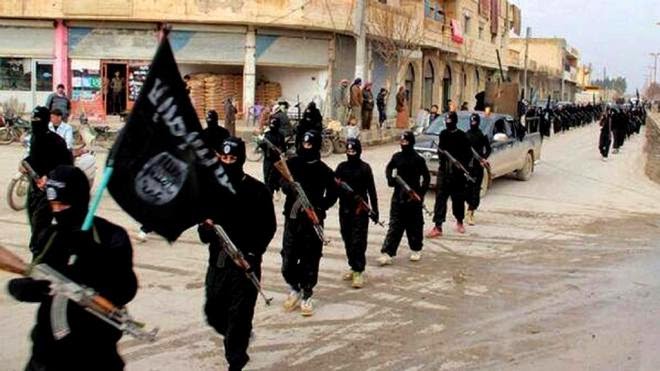
ISIS fighters marching in Raqqa, Syria. AP Photo/Militant Website File.
To most Muslims, and they are more than in the majority, those who commit acts of terror in the name of Islam are not really Muslim. They would distance themselves from extremists in their community, that too often, religious violence is not motivated by religion.
 
The Moro Islamic Liberation Front (MILF) has waged and continued the Moro’s armed resistance against colonization and in redress of their grievances against the central government in Manila. But it was never in the name of religion, or against the dominant Christian religion. There are other factions among the Muslim insurgents who might have used Islam as their inspiration but it is doubtful if their resistance was actually religiously- motivated.
 
Naturally, there are critics of religion who lack the ability to understand religion beyond its absolute and literal interpretations. They would comb the scriptures for examples of savagery and point to extreme patterns of religious bigotry, and to which they can generally ascribe the causes of oppression throughout the world.
 
This religious narrow-mindedness is what is fuelling the general antagonism to Islamic jihad, whether by the few Muslim extremists or the more peace-loving followers of Islam. It is the more heinous, radical and barbaric practices of extremists that get the attention of the news media and this type of coverage tends to band together all Muslims in a one-size-fits-all category. The barbarism of ISIS must be condemned but not to the extent of demonizing all Muslims in general.
 
It would be an unfortunate setback to the MILF and its government partners if the current debate on the proposed BBL is somehow hijacked by the horrors of Islamic extremism exemplified by ISIS. Already we are hearing murmurs on the side that if Congress fails to enact the BBL, it would have catastrophic consequences to the quest for lasting peace and could possibly swell the ranks of dissatisfied Muslim extremists in the South. That would be a great tragedy if the BBL is scuttled due to religious malice, not because of constitutional or other reasonable legal objections to the proposed law.
 
But first it should be clear to Congress that the proposed BBL does not aim to favour and put one religion over another. There should be a religious debate but not necessarily to determine why Islam should be accommodated. The purpose should be to address any misconceptions about Muslims in the South, that they are not the ISIS-garden variety. This exchange should not divide Muslims, Christians and other faith communities.
 
When that religious divide has been bridged, then the debate on the constitutional and other legal issues about the BBL should resume and it is best that these legal issues are settled without amending the Constitution.
 
The news media and the whole of social media should be involved in a robust and public debate on the merits of the BBL. A free and democratic exchange of opinions is important, not a railroading of the proposed BBL in Congress without serious deliberation, for after all both houses of Congress are controlled by the President’s political party that it might give the President and his rabid supporters the idea that a free debate is no longer necessary.
 
Scouring the news media and the various fora on the Internet, it is quite disheartening to notice the lack of a vibrant discussion on the BBL. Stories of the Binays’ alleged illegitimate wealth build-up seem to preoccupy the newspapers and discussions in social media. As the principal proponent of the BBL, President Aquino should be at the forefront of promoting it, but it seems he is either uninterested or simply confident that his majority in Congress will approve the proposed law no matter what.

Thursday, September 25, 2014

Bangsamoro hopes as ISIS looms


According to Mohager Iqbal, chairman of the Bangsamoro Transition Commission, enactment by Congress of the Bangsamoro Basic Law (BBL) would bring to a close the suffering of the Bangsamoro people, foster unity, bring about economic development and end radicalism among Muslims in the Southern Philippines.
 
Citing the recent Scottish referendum in which those against independence from Britain won and Scotland decided to remain under the Union Jack, Iqbal was also confident that the Bangsamoro entity would not rift the country apart but rather unify it. But this could be wishful thinking because at this stage, the new Bangsamoro state is still very much an elusive dream.

Supporters of the Comprehensive Agreement on the Bangsamoro show their
jubilation upon signing of the agreement between the Philippine government
and the MILF peace panels.
Even if the Aquino-controlled Congress could easily steamroll the enactment of the BBL, it is likely to face a constitutional challenge before the Supreme Court, and its ratification by the constituents of the Bangsamoro nation is not expected to be a sure thing. With the growing spectre of the Islamic State in the Middle East (ISIS or ISIL) reportedly having reached Southern Philippines, particularly among the more radical and disenchanted members of the Bangsamoro Islamic Freedom Fighters (BIFF) and the formerly Al Qaeda affiliate, Abu Sayyaf, the urgency of a Bangsamoro state looms even more urgent as the only peaceful alternative to a never-ending insurgency or to the establishment of a dreaded Islamic Caliphate in Mindanao.
 
There are constitutional landmines that the BBL needs to hurdle before Congress can enact the law. Assurances from the government panel that amending the Constitution is not necessary only appear to blindside the obvious constitutional questions. The new Bangsamoro entity envisaged under the BBL will clearly have a wide range of political powers not hitherto delegated or devolved to any other existing political subdivision like a province, city or town. The mere idea of forming a substate or a nation within a bigger nation is inconceivable because the Philippine Constitution does not allow it.
 
Pursuant to the mandate under the current Philippine Constitution, the Autonomous Region in Muslim Mindanao (ARMM) was created on August 1, 1989, through Republic Act No. 6734. The ARRM was officially inaugurated on November 6, 1990, in Cotabato City.
 
President Benigno Aquino III has said that the ARRM experiment was a complete failure because of corruption that plagued the new entity. In repealing the organic act that created the ARRM, the proposed BBL however goes beyond the framework of the current Constitution under Section 15.  For one, the BBL undermines the national sovereignty as well as the territorial integrity of the republic.
 
Although the BBL states that the Bangsamoro territory shall remain part of the Philippines, there are doubts however that it could be a preparation for ultimate secession from the republic. With a different government from the rest of the country based on the parliamentary system, exclusive and concurrent powers with the central government, and a shariah justice system for Muslims only, the BBL looks like a complete and comprehensive template not just for self-government, but for eventual independence.

Map showing the proposed new Bangsamoro territory.
Recall that the concept of a Bangsamoro nation is not the original creation of the peace panel that helped draft the Comprehensive Agreement on the Bangsamoro. Muslims or Moros in Mindanao have long believed they could not identify with the rest of the country, thinking that they do not belong. It has always been their claim that they were a sovereign people before colonization by Western powers, that their integration was forced upon them. It was this lost identity that led to the formation of the Mindanao Independence Movement in Cotabato in 1968, and later embraced by the Moro National Liberation Front (MNLF). This stirring for a separate nationhood is evident in the slogan of The Moro Islamic Liberation Front (MILF) that seceded from the MNLF and is now the major partner of the current administration for the enactment of the BBL: “We are Moros, not Filipinos.”

But if the BBL is the most viable non-violent alternative to Muslim self-determination in the south, then it should be laid out to the front so that the current Philippine Constitution could be appropriately amended to reflect that objective. The current text in the Constitution on the creation of autonomous regions in Muslim Mindanao is obviously insufficient to accommodate a Bangsamoro territory as envisaged by the BBL.
 
The problem with the current Aquino administration is its inability to stay within the parameters of the Constitution as evidenced by the pork barrel allocations and illegal transfers of government funds, and its lack of respect for equal protection under the law when apprehending perpetrators of corruption. The notion that the state can just suspend the fundamental rights of individuals by detaining them without trial reeks of injustice and offends the rule of law.
 
President Aquino and Congress should not cut corners in enacting a law that promises so much for our Muslim brothers in the south. In these crucial times when Western powers are being tested by a nascent and more extreme form of Muslim radicalism, one serious misstep like an error in constitutional judgment can foment and provoke choosing violence as the only available option for self-government.
 
The history of the Muslim struggle for self-government antedates the Philippines’ own independence movement against the Spanish and American colonizers. In the 1950s, the Kamlon uprising reminded us that the Moro rebellion has not been finished after the Philippines became independent from the United States in 1946. Beginning in the 1970s, secession had become the battlecry of the Moros of Mindanao. The MNLF waged a three-decade war against the central government until it accepted political autonomy under the 1996 peace agreement. But that didn’t last long and the MILF seceded from the MNLF which also spawned other disenchanted and more radical factions of the Muslim secessionist movement.
 
The Comprehensive Agreement on the Bangsamoro between the MILF and the present government probably has the best chance of achieving the lasting peace that has eluded all previous attempts toward a negotiated settlement of the Muslim problem. But if the government of President Aquino fails to deliver the Bangsamoro state to the MILF, what could be the last option for the Muslim rebels but embrace the more radical jihad of the Islamic State. They would seem better off to continue fighting for their own independence since that would ensure loyalty to their Islamic traditional beliefs, whether they follow the revivalist practices of Wahhabism espoused by Saudi Arabia or the extremism of Al Qaeda or of the ISIS.
 
Fixing the constitutional shortcomings of the BBL is not the only problem the government must do to satisfy the MILF. Conducting the plebiscite to get the ratification of the BBL is in itself a huge challenge. The proposed law is a voluminous text for the constituents of the Bangsamoro territory to digest and understand before they can make up their minds whether to ratify the law. The plebiscite is not just going to be like a referendum on sovereignty where a simple question that can be answered by a yes or no would suffice.
 
An example of a question which needs to be asked is how would the separability clause in the BBL be implemented in the event that some provisions of the BBL are rejected. How would that influence the entire law, or should it be allowed to stand despite some paragraphs being struck down?
 
If the constitutional objections to the BBL are cleaned up, the promise of the Bangsamoro state is an ambitious undertaking that could either break or make the Aquino administration. Previous presidents have failed, yet this current president who is perceived to be without a strong character but with the moral certitude bigger than the sum of his personality, could possibly emerge as a champion for the Muslim minority in the South if he knows how to play his cards correctly.

Wednesday, October 16, 2013

Depoliticizing Malampaya


So much of the controversy about the Malampaya Fund focuses on whether the President has the authority to use the Fund for purposes other than to finance energy resource development and exploitation programs as originally intended.
 
While the Malampaya gas field off the shores of Palawan would be discovered 18 years later, this is the intent of the Special Fund established by Presidential Decree 910 issued by Ferdinand Marcos during the second year of martial law in 1973. The aforementioned Fund shall be collected from fees, revenues, fines and penalties under the old Petroleum Act of 1949, as well as the government’s share representing royalties from service contracts and similar payments on the exploration, development and exploitation of the country’s energy resources.
The Malampaya Natural Gas Platform on the Palawan shore
The controversy surrounding the Malampaya Fund, however, is not just about the shifting of government funds, which came about only after the Commission on Audit reported that P900-million from the Fund were allegedly diverted to bogus NGOs by the pork barrel queen, Janet Napoles. This was on top of the enormous P10-billion congressional pork barrel that was also attributed to the plundering Napoles.
 
At the outset, the Malampaya Deep Water Gas-to-Power project—inaugurated in 2001 and now the biggest single source of the President’s Special Fund—is a Pandora’s Box filled with schemes of fraud, abuse of political power, usurpation of legislative authority, violation of the Constitution, and a host of possible irregularities by the current and previous administrations.
 
One of the largest and most significant industrial endeavors in Philippine history, the Malampaya natural gas project was considered a milestone for a country that has been hitherto been solely dependent on imported fuel. Malampaya changes this dependency as it now provides 40 to 45 percent of Luzon’s power generation requirements, thus enabling the Philippines to import less fuel for power generation.
 
Led by the Philippine Department of Energy (DOE), the Malampaya project was developed and operated by Shell Philippines Exploration B.V. (SPEX) on behalf of joint venture partners Chevron Malampaya LLC and the PNOC Exploration Corporation. At first blush, the project appears to be a perfect model for public and private cooperation, until one understands the investment structure and profit sharing arrangement of the Malampaya project.
 
When inaugurated in 2001, the $4.5-billion Malampaya natural gas project is and remains the largest single foreign investment in the history of the Philippines. The project is 45% owned by Shell Philippines Exploration, 45% by Chevron-Texaco and only 10 percent by Philippine National Oil Company (PNOC). What seems wrong with this picture?
 
Shell and Chevron-Texaco thus control virtually all of the country's proven natural gas reserves, and at the same time, ensnare the largest share of benefits from its exploitation. In return for their investment, Shell and Chevron-Texaco expect to get $14 billion back over 20 years, or P574 billion at current exchange rates.
 
What does the Philippine Constitution say about foreign exploration, development and utilization of our natural resources?
 
Article 12 of the 1987 Constitution allows ventures or production-sharing agreements with foreign companies up to 40 percent capitalization. This means that at least sixty percent of the capitalization of such joint ventures or projects must be owned by Filipino citizens.
 
The Malampaya natural gas project was an exception, if not an anomaly. It clearly violates the Constitutional limit on foreign capitalization to 40% on exploration, development and utilization of natural resources. The Philippine government has therefore allowed Shell and Chevron-Texaco to disproportionately benefit from our natural gas resources against the interests of the country.
 
In addition to their return on investment, Shell and Chevron-Texaco would also benefit from significant incentives under Presidential Decree No. 87 of 1972, the precursor to PD 910, and other related decrees leading to the creation of the Department of Energy. Among these incentives are tax credits that are exempted from income taxation, duty-free importation and unrestricted entry of foreign personnel. There could be more but without Freedom of Information legislation, the average Filipino would never know the exact details of Service Contract No. 38 that granted Shell and Chevron-Texaco free rein to exploit our natural gas reserves. The government also failed to negotiate any kind of meaningful technology transfer, which is important if we wish to end our perpetual reliance on foreign firms for exploitation of our energy resources.
 
Is it too late to correct this situation?
 
The current Constitution of the Philippines, which was adopted after the fall of the Marcos dictatorship, provides that existing laws, decrees, executive orders, proclamations, letters of instructions, and other executive issuances not inconsistent with this Constitution shall remain operative until amended, repealed, or revoked. Quite clearly, all presidential decrees made by Ferdinand Marcos are inconsistent with who has legislative authority under the Constitution. Besides, how can one morally justify perpetuating the vestigial decrees of a much-hated dictatorship? It amounts to continuing the dictatorship and its oppressive laws.
 
The Malampaya natural gas project is clearly unconstitutional because it violates the provisions of the Constitution on national economy and patrimony. The Special Fund created by PD 910 could likewise be inconsistent with the present Constitution because it was a law not passed by Congress but issued by a hold-over president under a dictatorship. If we can borrow an analogy from criminal law, the provisions of any presidential decree issued by Marcos during his dictatorship are tainted and are fruits from the same poisonous tree. We should junk all presidential decrees issued by the Marcos dictatorship if we are serious in enforcing the constitutional delineation of the power to legislate.
 
In the words of Supreme Court Justice Antonio Carpio, “PD 910 is functus officio [no force or authority].”
 
In view of the huge royalties from the Malampaya gas project, it appears ludicrous that allies of President Aquino in Congress would now like to amend PD 910 insofar as limiting the Special Fund to the financing of energy–related projects. President Noynoy Aquino apparently wants his authority to use the Special Fund for other purposes be clearly defined so that it would give him the discretion to use the Fund as he pleases. Of course, Congress can pass a law to this effect which makes it more legally palatable under the Constitution instead of relying on the provisions of a Marcos-issued presidential decree.
 
Even if Congress amends PD 910 or enacts a new law that would define and expand the authority of the President in using the Malampaya Fund, this is not a foolproof escape route from the onerous provisions of a martial law presidential decree and it will certainly not prevent misappropriation and misuse of the Fund and future pork barrel scams. By and large, it only enhances the probability of more abuses and opportunities for economic plunder by this administration and succeeding governments since the pie would be significantly enlarged, not to mention the broad discretion to use it.
 
It was estimated that the Malampaya project would yield over P12 billion annually in royalty shares for the national government. In 2012 and 2013, the royalty shares reached $1 billion or P40 billion annually.
 
During the Arroyo Administration, about P25 billion was spent while P15 billion has been used under President Noynoy Aquino. The Malampaya royalty will get larger and the opportunities for its misappropriation and abuse will increase exponentially. In fact, the Malampaya Fund has become a huge political pork barrel.
 
There is also an ongoing dispute before the Supreme Court regarding the legal framework on natural wealth sharing. Under the Local Government Code, the local government unit where a natural gas field, in this case the Malampaya gas project, is located gets 40 percent of the royalties while the national government, 60 percent. But Palawan has been denied by the national government of its share and it’s taking the Supreme Court an inordinate time to rule on the territorial jurisdiction issue.
 
The interim sharing between the national government and Palawan has not been subjected to public scrutiny and transparency. Although an initial release of P3.9 billion to Palawan has been made in 2008, the disposition of the fund did not follow the general provisions of PD 910 which prescribed that 80% must be spent in energy-related projects benefitting the local population.
 
As it was the case for the congressional pork barrel, local political leaders determined the projects and manipulated bidding rules to favour certain public works contractors. Like the Napoles pork barrel scam, there were ghost and overpriced projects.
 
To reverse the current situation, Congress must regain its power to legislate under the Constitution by revoking all presidential decrees issued by the Marcos dictatorship. It must exercise congressional oversight of the Malampaya royalty fund, with the end in view of depoliticizing the fund as a pork barrel.
 
In addition, the Supreme Court should now decide on the sharing arrangement between the national government and Palawan: the Malampaya royalty should be used where the law intends it to and the local population gets the benefits from the exploitation of their natural resource.

Wednesday, March 6, 2013

Mad against dynasties


We have been unbelievably seduced by democracy’s self-fulfilling prophecy that it will always prevail in the end. That during times of crisis, the electoral process will measure up to our expectations and deliver the kind of men and women who will lead us to democracy’s promised land. This has always been the public perception manufactured by government and those in power every election year. For so long we have counted on democracy to check the excesses of our political process, and it seems the long years of exposure have made us numb, almost like zombies who would do and think(?) whatever is told them.
 
Why vote when it counts for nothing? Or to the seasoned cynic, why vote when your vote will not be counted? Maybe it will, but not for your chosen candidate but added to the votes in favour of another. This is the Filipino state-of-the-art counting of votes: “dagdag-bawas” or add-substract. Whatever new election technology the Commission on Elections (Comelec) has, there’s always a counter technology to subvert it, a product of Filipino ingenuity.
Article 2, Section 26 of the Philippine Constitution provides: The State shall guarantee
equal access to public service and prohibit political dynasty as may be defined by law.
Click link http://www.youtube.com/watch?v=7hV5Xra6f0s to view Dynasties in
Democracies: The Political Side of Inequality.
We have been for so long focused on the wrong problem. It’s not counting the votes that matters but the kind of people to choose from. But in the final analysis, the deficiency could also be our fault for why after all do we keep voting for the same families and their relatives? Or why are we easily persuaded by the glamour and fame from acting or boxing in the ring that it can translate to serious political responsibility? Or why do we thumb down our noses on people who honestly care for the poor, those whose sterling record in serving the people is an exemplar for the kind we must elect in office?
 
Wealth and power determine the outcome of the electoral process. Political dynasties have accumulated wealth and power over a long period of time. Elections are important, not so much for the masses, but mostly for these families to keep their stranglehold on political power. As a result, our democracy is flawed, not a truly representative democracy.
 
If the government is really serious in reforming the electoral process so that democracy works and becomes more truly representative, the solution is not in simply automating election results but in retrofitting our mindset with radical ideas of reform and change. We can be experts in counting beans or even the stars in the sky, but we need to see the beans as being nutritious supplements or the stars lighting the darkness above us. Even before we can ensure that counting votes is quick and accurate, the people must be ensured that the candidates are not only qualified but will serve the public with integrity and honesty. No election apparatus can give this assurance; thus, any improvements in the electoral process must come from the people’s elected representatives to enact the necessary and relevant legislation.
 
But here’s the catch. The real problem looms even bigger because our representatives in Congress will naturally refuse to make laws that run counter to their interests. After their election, victorious candidates tend to suffer from loss of memory, forgetting the people who elected them and the promises they made. Such is the nature of the human condition. That is why we need to be forever vigilant even if we have to launch a kind of fugitive democracy, or what is sometimes referred to as democracy without politics.
 
We can’t just sit still and do nothing. One obvious way to prompt our elected representatives is being irritating. Mark Kingwell, a professor of philosophy at the University of Toronto, likens this to a lump of foreign matter that enters a complacent system and induces a kind of internal instability. Kingwell analogizes it to the abrasive grain of sand that slips inside an oyster’s shell and in attempting to stabilize itself, the oyster creates something new and beautiful.
 
In my previous blog I wrote about democracy without elections and this is possible if the people can just be irritating enough to compel their representatives to implement the democratic provisions of the Constitution that allow the people to directly enact laws by initiative and referendum. Rule of or by the people is ingrained in the 1987 Philippine Constitution. Section 1, Article II states that “sovereignty resides in the people and all government authority emanates from them.” Under Section 2, Article XVII, amendments to the Constitution may be directly proposed by the people through initiative, and under Section 32, Article VI, the people can also directly propose and enact laws or approve or reject any act or law through a system of initiative and referendum. In 1989, Congress passed Republic Act No. 6735, “The Initiative and Referendum Act,” the enabling legislation to the aforementioned constitutional provisions.
 
Interestingly in 1997, the Philippine Supreme Court on three occasions examined and rejected RA 6735, but only insofar as the law was supposed to implement the system of initiative on amendments to the Constitution. In its decision, the Supreme Court ruled that Congress downgraded the importance or paramountcy of the system of initiative as envisioned in the Constitution and merely paid lip service to it. The original decision declared RA 6735 incomplete or inadequate in spelling out the essential terms and conditions for implementing the system of initiative on constitutional amendments.
 
The Supreme Court would revisit the same law in 2006 after the Comelec junked a proposed initiative by the Sigaw ng Bayan Movement to amend the Constitution which would change the government into a parliamentary system. Comelec dismissed the petition of Sigaw ng Bayan and the Union of Local Authorities of the Philippines to verify signatures they have gathered in support of their petition. Malacanang was rumored to have backed the petition and even government funds were allegedly used in procuring the supporting signatures.
 
Again, the Supreme Court voted to uphold its previous ruling in 1997, this time arguing that the proposed changes being sought by the petitioners would constitute a major constitutional overhaul. According to the Supreme Court, the “people’s initiative” as envisaged in the Philippine Constitution can only be used for lesser amendments. The high court also took notice of the alleged deceptive signatures gathered to support the petition and ruled that it cannot therefore allow such constitutionally infirm initiative to desecrate the Constitution.
 
Arguably, the Supreme Court’s decision was obviously politically motivated, but the onus should really rest on the proponents of the initiative to show they have satisfied the constitutional requirements and that the proposed parliamentary system was not motivated by selfish interests. The stakes were high in 1997 and 2006 because both the initiatives were intended to amend or revise the Constitution. Instead of stoking the divisions that were breaking the country apart as to whether to proceed with the revision of the Constitution, the Supreme Court decided to thread its grounds very lightly by preserving the status quo.
 
Apparently, the provisions of RA 6735 regarding the system of initiative and referendum for the people to directly enact legislative proposals were saved and not invalidated by the Supreme Court decision. This is now the new battleground, and it has already started with proposed initiatives by civil society organizations for the people to enact a law prohibiting political dynasties in accordance with the Philippine Constitution. Members of the multi-sectoral Movement Against Dynasties (MAD) have started gathering signatures for their campaign. The Kapatiran Party has filed a petition with the Comelec to hold an initiative for the people to enact a national legislation against political dynasties. AnDayaMo (Anti-Dynasty Movement) has also filed a petition with the Comelec to disqualify certain candidates who are members of known political clans. Meanwhile, the Catholic Bishops’ Conference of the Philippines (CBCP) threw its support to the growing anti-dynasty movement through a pastoral letter read in all their parishes entreating all Filipino Catholics to support the people's initiative to enact a law against political dynasties.
 
At present, two anti-political dynasty bills are sitting in Congress, one in the Senate authored by Miriam Defensor Santiago and another in the House of Representative authored by Teodoro “Teddy” Casiño. Both bills, which are identical and cover only locally elected officials, are in limbo and unlikely to see the light of day as members of Congress are not expected to pass legislation that endangers their own selfish interests.
 
Since more that 75 percent of its members are from political dynasties, Congress
passing a law to implement the constitutional prohibition against political dynasties
is next to impossible. Click link to view and sign petition, End Political Dynasties
Now!,  http://www.change.org/petitions/end-political-dynasties-now

More than half of the 33 senatorial candidates on the official ballot in the coming May 2013 elections are scions of notable families who have long dominated the landscape of Philippine politics. One Filipino senator, who is not linked to any political dynasty, has called the Philippines the “world capital of political dynasties,” with 178 active dynasties. They are the “equivalent of Mafia crime families,” she added, who have carved a monopoly of political power over a long period time, some for more than 30 years.
 
Enough. No more. Tama na! This must be the people’s rallying cry. The genuine rage against the entrenched elite and families dynasties is real. It’s like the Occupy movement that infuriated Wall Street financiers in the United States during the fall of 2012, but much better because here the people have a clear purpose of what they want to achieve. They have leadership and organization. This is the clear first step on the road to democratic recovery, and it is historically correct since it is the mass movements that are generally responsible for fundamental changes in society, not a small group of politicians elected because of their social class, wealth and power.

Wednesday, February 27, 2013

Saving democracy without elections


Under American colonial rule, the Philippines had its first taste of what elections were really about on July 30, 1907. This was made possible by the Philippine Bill of 1902, also known as the Cooper Act, which allowed Filipinos to elect delegates to the Philippine Assembly two years after peace and order had been established in the country. The Americans had already defeated the Philippine insurrection, and in 1906, US President Theodore Roosevelt proclaimed that the country was now ripe to hold its first elections.
 
It was an issue-driven election unlike any other. One of the major parties, the Nacionalista Party, wanted immediate independence from the United States while the other party, the Progresista Party, campaigned for eventual independence. The Nacionalista Party won overwhelmingly, taking fifty-nine out of the total 80 seats of the National Assembly. Thus, the people, by voting for the candidates of the Nacionalista Party, chose to have independence now, and not later. Of course, it would take several years more before this aspiration of independence could be realized: the first Commonwealth was inaugurated in 1935 as a transition government preparatory to independence, then the three-year Japanese war interrupted the Philippine democratic experience under American tutelage, and on July 4, 1946, independence was finally granted by the United States.

50th Commemorative Stamp celebration of the Anniversary of the 1907 Philippine
 Assembly featuring a vignette of Sergio Osmena, the first speaker (right) and
members of the Assembly. Click link to view The History of Elections in the
Philippines, Part 1,  http://www.youtube.com/watch?v=NMzrrx-BYMc, by the
Institute for Political and Electoral Reform.
We were a small country then, with 7.5 million people based on the first-ever conducted 1903 census under Governor William Howard Taft. Today, the Philippines has a population of more than 100 million. Imagine how crude and rudimentary our electoral process was in 1907 compared to the automated elections we have now.
 
Before, our people voted to resolve political issues such as national independence. Today, people march to the polls under duress, threats or the influence of bribe and corruption. Now, voting seems to be just a meaningless ceremonial rite of suffrage. People today don’t vote on issues, or don’t care about issues. Similarly, the candidates don’t run on a comprehensible political party platform; there are no ideologically distinct political parties, but only coalitions around fleeting and non-perennial causes. Name recognition, association with prominent families, and entertainment or movie credentials, these are the things that matter now.
 
In this coming May 2013 elections, more than 33 senatorial aspirants and 133 party-list candidates are on the official ballot. Only 12 senators and 58 or 60 party-list representatives will be elected, along with provincial, city and municipal officials throughout the country. Amid all the displeasure and criticism of the election technology chosen by the Commission on Elections (Comelec), it appears that the aforesaid technology is inadequate to allay fears of massive cheating and a potential unfair election outcome.
 
The Precinct Count Optical Scan (PCOS) machines that will be used in the coming May 2013 synchronized national and local elections are under fire from the Automated Election System (AES) Watch which has questioned the readiness of the automated polls system.
 
Based on the experience with the same technology adopted by Comelec during the last 2010 elections, AES pointed out that many problems and issues remain unresolved such as ballot rejections, transmission failures, inaccuracy of the vote count, election returns and certificates of canvass not digitally signed as required by law, among others. Comelec Chair Sixto Brillantes Jr., however, is undeterred and confident that the automated system will work. Boasting that the PCOS machines cannot be manipulated, Brillantes is even offering a reward to anyone who can hack into the PCOS machines that will be used in the May elections.
 
As established in the Universal Declaration of Human Rights, the will of the people expressed through periodic and genuine elections shall be the basis of government authority. Elections are at the heart of the democratic process. But to realize the democratic potential of elections, they must be honest and fair, genuinely transparent, and on a level playing field. The irony, however, is that most election events are conceived and held outside their broader political context. Instead of being the democratic solution, oftentimes, elections are as much a part of the political problem.
 
Philippine elections are a case in point. After the campaign for independence from American colonial rule, elections were simply occasions to change political leaders through some revolving door, as in the case of the presidency. Ferdinand Marcos was the first president to be re-elected, breaking convention and tradition, although by all accounts, his re-election only happened because he manipulated the election results. When he declared martial law, elections became a farce, and like any other despot, Marcos used elections as a veneer of democratic legitimacy. With the downfall of Marcos in 1986, Corazon Aquino restored the old convention of electing presidents for one single term, even if Gloria Macapagal-Arroyo tried to circumvent the historical practice but failed.
 
The only genuine political issue that was presented upon the Filipino electorate was immediate independence from the United States as soon as the colonial rulers decided it was time to experiment with democracy in the Philippines. But after the establishment of the first Commonwealth, the only option left for Filipinos was to vote for their president based on persona, not the ideology or party platform. Manuel Quezon was elected first president because he was able to project himself as the one responsible for getting the independence the Filipinos wanted. Sergio Osmena succeeded to the presidency when Quezon died while Manuel Roxas was elected president in 1946 when independence was finally granted by the U.S. Congress because Osmena at that time was too old and sickly to hold on to the presidency. The rest of the next presidential successors were elected not on the strength of a political platform but merely on how well the candidate framed accusations of graft and corruption against the incumbent or his political opponents. Henceforth, every presidential candidate would be running on the mantra of eliminating graft and corruption, with President Noynoy Aquino’s “matuwid na daan” being the most recent version of this national fixation against government corruption.
 
The election of senators and members of Congress is largely a popularity contest. People really don’t care except who ends up number one in the senatorial contest. Since senators are elected nationally, name recognition and fame are important. An offspring or descendant of a prominent family, particularly from a political dynasty, virtually has clinched a spot in the elections. Fame from acting in movies or in sports makes the candidates appear bigger than life, so the lack of political experience is not a liability for as long as one is a marquee candidate or married to a famous movie celebrity.
 
Thus, all this talk about Comelec’s election technology being inadequate to count the people’s votes is nothing but a convenient diversion from the genuine issues that really matter. An honest public discussion of the real political issues is sorely lacking, such as widespread poverty despite the government’s claim of growing economic prosperity, dependency on export of cheap labour, continuing violations of human rights, disappearances and extra-judicial executions, or the entrenchment of political dynasties in power.
 
Yet, the Comelec and its critics keep on missing the point: does modern technology in counting the votes make us a better nation than in 1907? Or are we really that fully independent from the United States considering that their powerful navy and special military forces can go in and out of our territories as if our waters and lands still belong to them? Or why would Filipino expatriates in the US easily jump into the South China Sea dispute to rally behind the current government’s claim over Spratlys, but remain silent on the Sultan of Sulu’s historical claim for ownership of Sabah? Aren’t these also relevant issues the people would like to hear from the candidates?
 
We often blame our political system for the personalities that run it. But this is both unfair and misleading since politicians are morally little different from anyone else. Perhaps, we should not lay too much blame on the individuals, but on the system in which they operate.
 
The self-evident truth is that our political salvation lies not in more elections or in modernizing the technology of counting the votes. Elections are necessary to establish democratic governance and the legitimacy of government, but we don’t need sham elections as frequent as we do just to elect clowns in government and in Congress. If elections have limitations, then what is the alternative?
 
There must be some viable alternatives for the people to assure that we have a flourishing participatory democracy. As a matter of fact, the present Constitution of the Philippines allows actual rule of the people, instead of simply relying on elected representatives. The 1987 Constitution allows the holding of a people’s initiative to enact legislative reforms by referendum or plebiscite. In 1989, Congress has passed Republic Act No. 6735, “The Initiative and Referendum Act,” which empowers the people to directly propose amendments to the Constitution, and to enact laws, ordinances or resolutions, through a system of initiative and referendum.
 
The system of initiative and referendum has been a popular tool in advanced democracies in enabling the people to directly enact legislation, especially on issues that are quite urgent but unpopular and controversial, or issues some may find radical in nature. Several states in the United States, for example, have passed, through their respective referenda, laws allowing same-sex marriage and the use of marijuana. Plebiscites are another form of alternative political method of expressing the voters’ will on matters that are vital to them and to the nation. So far, the Comelec has held plebiscites only for the purpose of ratifying the creation of new barangays and conversion of municipalities into cities.
 
Voter turnout during national elections in the Philippines from 1946 onwards.
Photo by wikipedia. Click link to view The History of Elections in the
 Philippines, Part 2,  http://www.youtube.com/watch?v=6YoBu3B0mKI
by the Institute for Political and Electoral Reform.
The democratic provisions of the Philippine Constitution will remain nominal and aspirational at best if the Filipino people do not dare challenge Congress and the Comelec to enforce them. This is the only way we can save our democracy without resorting to unnecessary elections, to allow the people to exercise their constitutional right to directly enact legislative reforms rather than wait for their elected representatives to act.

Thursday, November 1, 2012

Bring back power to the people


The Filipino family is the most enduring political unit in Philippine society, according to American anthropologist Brian Fegan in his book, An Anarchy of Families. It is considered almost customary in preserving political continuity to allow the transfer of political power among family members. Rivalry between families is very common during election time and as soon as they get elected, these families tend to entrench upon themselves a permanent right to political office.
 
Any talk about political theory is one thing, and political reality, another. The 1987 Philippine Constitution prohibits political dynasties to guarantee equal access to opportunities in public service. Obviously, the intent of the framers of the Constitution was to level the playing field. But the Philippine Congress has not enacted the enabling legislation that will define and restrict wealthy politicians and their families in establishing their monopoly of political offices.
 
We have to look back at our history to fully understand why the wealthy have entrenched a dynasty over political offices. When the Philippine Commission established the national assembly in 1902, William Howard Taft, then Governor-General of the islands who also became U.S. President and Chief Justice of the U.S. Supreme Court, identified affluent Filipino politicians to become members of this assembly. Taft also wrote a book, Political Parties in the Philippines wherein he concluded that Filipino politicians had yet to learn the idea of individual liberty and the practical elements of a popular government. He wanted the Philippine Assembly as a training ground for self-government. Eventually, this assembly became the Congress of the Philippines and the Jones Act of 1916 created the Senate replacing the Philippine Commission.
 
The American colonial government planted the roots of oligarchy in the membership of the Philippine Congress. While the Americans trained the Filipinos for self-government, they did not change the Filipino social structure. They merely imposed a political system that allowed the existing social structure to gain political power. Taft’s idea of letting society’s affluent members constitute Congress resulted in the formation and circulation of elites that perpetuate their hold on political offices. Since the oligarchic elite also controls the economic levers of the country, passing political power to and between members of their families became almost as natural as bequeathing their fortune to their heirs.
2013 Senatorial candidates. Guess who's related to who? Click link to view
http://www.youtube.com/watch?v=FXYK4fKlkIM "Political Dynasties in PH."
In the beginning, political dynasties were mostly limited to scions of the wealthy oligarchy. But with the enactment of term-limits, political dynasties have become a family affair. Thus, when a member of Congress is forced to step down after three terms, the wife, husband or child or cousin can run for office as successor while he or she runs for the governor of the province or the city or town mayor. After the end of the three-term limit, the vicious cycle of political succession among family members resumes again and there has been no end to it. The Filipino family, as Fegan has said, is thus the most enduring political unit.
 
Just look at the composition of today’s Philippine Congress. You see father and son, or mother and daughter, one a senator and the other a member of the lower house. Or siblings sitting together as senators. Or children of their once-famous or infamous father or mother who also sat in Congress before them. Point a finger to an individual member of Congress and you can trace his or her family connections: the Aquino-Cojuangco family, the Macapagal-Arroyos, the Ponce Enriles, the Estradas, the Rectos, the Osmenas, the Marcoses, the Cayetanos, and the Angaras— almost everyone is related to each other, whether as a sibling, a parent or a distant relative. Go down further the government pyramid and you see governors, mayors, and barangay chairmen and their councils who are related to each other, either by blood or affinity.
 
Even the party-list system, which is supposed to promote proportional representation in the House of Representatives, has been held captive by wealthy and influential families. In fact, party lists are being financed by the already-entrenched political elite to ensure access to Congress by their relatives.
 
To level the playing field of the political arena and to prevent public office from becoming the monopoly of influential families and clans, there is now in Congress a bill that will give force and effect to the Constitutional prohibition against political dynasties. The proponents of the bill believe that it will remove the damaging effects of the extended Filipino family system on the Philippine political structure or on how the government is run.
 
But the proposed law will not alter the political landscape. Monopoly of political power and public resources by entrenched political dynasties will continue for as long as they can hold on to their economic power. With their unlimited economic means, they can continue to bankroll their elections or those of their relatives.
The Marcos family - political life after Ferdinand. Click link to view
http://www.youtube.com/watch?v=7hV5Xra6f0s "Dynasties in Democracies:
The Political Side of Inequality."
If serious reform of the political structure is being envisaged to cause dramatic changes that would equalize access to political office by all, then what seems logical to do is to overhaul the entire government. Not by an armed revolution or another EDSA People Power, but through a revision of the Constitution by the initiative of the people. It is unlikely that the present members of Congress would pass any legislation that would curtail their influence and their families’ political succession. That would be like asking them to bang their heads on a stone.
 
The current Constitution allows amendments through a people’s initiative. A petition must be initiated by at least twelve percent of the total number of registered voters, of which every legislative district must be represented by at least three percent of the registered voters. How this works will depend on Congress which shall enact the enabling legislation for the implementation of the right of the people to amend their Constitution through initiative.
 
Forget Cha-Cha through a constitutional convention or a constituent assembly. The Filipino people cannot rely on their elected representatives, so they must exercise their initiative to bring out the necessary reforms. So, let’s begin this process by petitioning our representatives and senators in Congress to pass a law that will implement this people’s initiative.
 
A people’s initiative to amend the Constitution may also be a big blessing in disguise for President Noynoy Aquino if he needs to ensure that the Bangsamoro Agreement he signed with the MILF is constitutionally valid.
 
What could a people’s initiative to amend the Constitution likely entail? Let’s look at one possible scenario.
 
First, abolish Congress. Replace it with a unicameral legislative assembly that will be composed of representatives elected directly by their constituents by electoral districts or wards, which shall not be more than 100,000 registered voters. Assuming the total registered voting population is 5o million, the assembly will consist of 500 elected members.
 
Second, abolish the Senate. The present crop of senators, although directly elected nationally, does not actually represent a natural constituency. Besides, there is no need for an upper house which could be the cause of legislative gridlock. Electing senators nationally gives the advantage to those who have the money and popularity.
 
Third, limit campaign financing to one peso per registered voter, which by our example would cost 100 thousand pesos. This would make the election more accessible to all. Personal or private donations to campaigns will be strictly required to be disclosed. All donations over and above the limit of 100 thousand pesos per candidate will escheat to the Commission on Elections, which in turn shall equally apportion the total collections to each candidate for additional campaign expenses such as television, radio or print advertising.
 
Fourth, continue the election of the President and Vice President at large, but no President shall be declared elected without getting the majority of the votes (50 percent plus 1). This may require a second or third run-off election if there are more than two candidates running for office.
 
And fifth, provide for implementing law for the recall of representatives who fail to meet the expectations of their constituents.
 
A people’s initiative may sound wistful to many, but why the heck do we have this provision in our Constitution if we cannot avail of it? There is no better time than now to make use of this initiative. Besides, this mode of amending the Constitution seems far more democratic than anything else inasmuch as the people will be directly making the proposed changes. Not our Congress or our elected representatives when the people have obviously lost their trust in them.

Wednesday, October 12, 2011

Charter Change is not the answer


The impetus to amend the economic provisions of the 1987 Philippine Constitution comes from the basic argument that such revisions are necessary to ease up restrictions on foreign investment. Proponents of Charter Change say that the nationalistic economic provisions of the Constitution are hampering the flow of foreign direct investment. They claim that these provisions are driving foreign investors away.
Makati City business centre awaits more foreign investors to the Philippines.
On paper, meaning by simply reading the 1987 Constitution alone, foreign equity has been limited to 40 per cent in the operation and management of public utilities, exploitation of natural resources, ownership of private lands and educational institutions, and to 30 per cent in the operation of advertising agencies.

In reality, however, these provisions have been watered down, diluted or even circumvented by legislation passed by one administration after another right after the 1987 Constitution was enacted during the term of President Corazon Aquino. Through one amendment after another, laws have been passed by Congress to ease regulations and provide incentives to foreign investors.

1991: Corazon Aquino Administration exempts foreign investors

The Corazon Aquino administration passed the Omnibus Investment Code which exempted foreign investors and corporation from the 60 per cent rule in operating local enterprises that are considered pioneer projects and priority areas of investment. In 1991, investment laws for foreign capitalists were further liberalized by the Foreign Investments Act.

The subsequent administrations of Fidel Ramos, Joseph Estrada and Gloria Macapagal-Arroyo also enacted laws favouring foreign investors. In 1995, the Special Economic Zone Act was passed. It was followed by related laws creating special economic zones in Cagayan, Zamboanga City and in the Calamba-Batangas-Quezon (Calabarzon) area where foreign corporations were allowed full freedom to operate.

1994: Congress enacts all-out liberalization of trade

In 1994, the General Agreement on Tariffs and Trade (GATT) was also ratified, thus enhancing an all-out liberalization of trade. Further laws were passed by Congress that liberalized foreign investments such as the Bank Liberalization Law of 1994, the Build-Operate Transfer Law of 1994, the Mining Act of 1995, the Oil Deregulation Law of 1997, and the Investment House Liberalization of 1997.

To make the environment more attractive to foreign investors, Congress also passed legislation that weakened labour unions and pulled down the cost of Filipino labour. In 1989, for example, the Wage Regionalization Act was enacted to offset demands for wage increases and abolish national minimum wage standards. The Labour Code was also amended to allow contractualization of labour and impose additional restrictions on the right to strike. As a consequence, the number of unions and unionized workers in the Philippines has dropped by more than 80 per cent since.

Attracting foreign investments has always been the key element in the economic development programs of the previous administrations from Cory Aquino to Gloria Arroyo. Foreign capital was invested in privatized and deregulated industries such as power generation, water and electricity distribution utilities, road infrastructure, transportation, and in business process outsourcing to take advantage of the deregulated regime and generate big profits for foreign corporations.
A computer programmer at a busy call centre work station in Manila. Photo courtesy
 of Jay Directa-AFP File. Click link  http://www.youtube.com/watch?v=gdOpLnsnej4
 to view "Global investors confident of more foreign investment flows for Philippines."
 Notice no mention of economc restrictions on foreign investments.
So, all this talk about the restrictive provisions of the 1987 Constitution is nothing but hot air. The patrimony provisions in the Constitution are merely aspirational, without teeth and reduced to ideal norms that have been crushed by legislation and sycophantic administrations to foreign investors.

Yet PH still lags in attracting foreign direct investments

Compared to China, a communist country without the fundamental freedoms that Filipinos enjoy and with a very restrictive economy, the Philippines received only more than $9 billion foreign direct investment in 2009 as against $60 billion for China. In 2010, foreign direct investment in China was estimated to have reached $115 billion.

Yet, the Philippines is a constitutional democracy, where people speak English like a first language and have freedom of speech, religion, an established judicial and legal system, and among other things, are familiar with the Western way of life.

On the other hand, while China is the largest economy in the region, it is also the most restrictive. Foreign corporations are investing more in China in spite of its record of human rights violations, use of child labour, tainted products and probably the world’s biggest violator of intellectual property rights.

Why do our leaders in government and those in business continue to blame the Constitution for the country’s inability to attract foreign capital? Despite limits imposed by the Constitution, previous administrations and Congress have run around them by liberalizing laws and regulations in favour of foreign corporations. Yet, foreign investors remain cool on the Philippines.

One keen Filipino observer noted that “the economic provisions of our Constitution are not the reasons why foreign investors are shying away from our country. Corruption, uneven playing field, ineffective governance and leadership, changing rules, no sense of urgency for reforms and a negative country image, among others, are the reasons why. Certainly, Charter change is not the solution.”

Dr. Bernardo M. Villegas, Senior Vice President of the University of Asia and the Pacific and a columnist in the Manila Bulletin, continues to insist that “a major explanation for the unattractiveness of the Philippines to the outsiders is the restrictiveness of our Constitution and other laws that are anti-foreign investors.” Villegas is convinced that amending the Constitution will result in attracting much-needed foreign equity capital in the form of foreign direct investments.

In fact, PH is lowest in business competitiveness

The IMD-World Competitiveness Yearbook 2011 results released recently by the Asian Institute of Management showed that the Philippines has slipped in business competitiveness as compared to its neighbours in the Asia-Pacific region. The Philippines is still the laggard in Southeast Asia compared to its competing neighbours Singapore, Thailand, Malaysia and Indonesia which again emerged with higher rankings.

According to the competitiveness report, the Philippines ranks poorly in infrastructure, one of the four major categories used in measuring the countries’ competitiveness. The other factors are economic performance, government efficiency, and business efficiency.

Notice that restrictive economic provisions, such as those found in the 1987 Constitution, are not cited as impediments to competitiveness. China, for example, which is a very restrictive economy, ranks very high in the competitiveness survey and is in a league of its own.

With dependence on foreign loans and foreign investment as the centrepiece of economic development plans, the influx of foreign capital into the Philippine economy has not resulted in dramatic improvements. Instead, the local economy continues to slump in a constant state of crisis.

Considered as the engine of economic growth, manufacturing, for example, has continued its decline in spite of foreign investments.

The number of manufacturing firms has fallen from 7,500 in 1999 to 4,600 in 2008, resulting in a drop in employment from 1.1 million to 860,000 or a decline of 4 per cent in its share in total employment. Manufacturing contributes only around 23 per cent of the total gross domestic product—the same level it was more than 50 years ago.

Using the Constitution as cover-up for laggard economy

Proponents of lifting the constitutional restrictions on foreign investment are not being honest to the Filipino people, or continue to be in a state of denial. Restrictions on foreign equity exist only on paper.

Despite legislation designed to liberalize infusion of foreign capital, the economy remains stagnant and our leaders in government and those in business are ignoring the real causes and looking for an easy scapegoat.

Instead of identifying corruption in government, indecisive leadership, excessive bureaucratic red tape, and poor infrastructure, they’re all blaming the Constitution as the major impediment to economic growth because it limits foreign ownership and control of local businesses.