Translate

Showing posts with label ISIS. Show all posts

Thursday, October 9, 2014

Bridging the religious divide


Some critics of the Bangsamoro Basic Law (BBL) now undergoing congressional review and debate are quick to draw attention to what they perceive as an apparent bias or partiality toward one religion over the others. This understandable disapproval tends to gloss over the historical context of the struggle for self-determination of our brother- Muslims in Southern Mindanao.
 
Perhaps this religious-based criticism could also be traced to the emphasis placed by Muslims on religion as the basis of everything. To Muslims, all matters in life, whether governance, justice, culture, social relationships, family, etc., emanate from religion.

President Noynoy Aquino witnesses the turnover of the proposed draft Bangsamoro
Basic Law between Moro Islamic Liberation Front (MILF) peace negotiator Mohagher
Iqbal and Senate President Franklin Drilon.
As the Al Qalam Institute on the Bangsamoro Basic Law of Ateneo de Davao explains: “What is religious is political and conversely, what is political is religious because the two are so intertwined in the life of the Muslims. Therefore, no religious test must be used to assail the autonomy being granted to the Bangsamoro.”
 
Therein lies the controversy. How do we bridge this contradiction between the secular world perspective we have been used to after gaining independence from Spain on one hand, and the Muslim’s belief in the transcendence of religion over all others, on the other?
 
If the principal objective of the BBL is to construct a closed Islamic society or state for its constituents alone, and not for the entire people of Mindanao who are still subject to the secular central and local governments, then what is highly objectionable in this kind of arrangement? It is not Islamic hegemony that is being fostered by the BBL but a type of asymmetric relationship to the constitutionally-recognized national government, where some political powers are devolved upon the new Bangsamoro community, yet it is still subordinate to central governance.
 
Does the integration of the Islam religion with the political and social affairs of the Bangsamoro contradict the inviolability of the separation of Church and state under the Philippine Constitution?
 
A textual exegesis of the Philippine Constitution shows that many concepts enshrined in the document such as justice, peace, equality, freedom, protection of life and property, respect for human rights, the sanctity of family, among others, have their roots in Judeo-Christian religious beliefs. Arguably, such concepts are also accepted and practised by other religions, thus bringing us to the conclusion that Muslims are probably on the correct side of the argument in saying that all matters in life can be traced to one’s religion.
 
What the Constitution clearly proscribes is a situation where the government allows the Church and its leaders in controlling the affairs of the state, e.g., President Aquino asking the Archbishop of Manila to run the government for him. He may personally ask the Cardinal for his prayers but he cannot turn over the government to the clergy. Or inversely, President Aquino declaring the Roman Catholic Church as the country’s national and only church.
 
Similarly, the head of the Bangsamoro government may ask the Imam for spiritual guidance but not surrender the affairs of government to him. The Bangsamoro government is not a theocratic entity like Iran where the Supreme Leader or the Ayatollah controls the government in order to protect the Islamist ideology.
 
There seems nothing wrong in allowing religious traditions, customs and practices of one community to prosper. But it has always been difficult for many to understand and appreciate the impact of the Muslim religion because there is this tendency to attribute all forms of religious violence to Islam.
 
Did we ever question whether the terroristic acts committed by the Islamic State or ISIS are sanctioned by the Qur’an? Rather, we immediately resort to a knee-jerk reaction so typical of many who would equate religious violence with Islam. A case in point is the TV pundit Bill Maher who has argued that Islam is unlike other religions, because to his view, Islam has “too much in common with ISIS.”
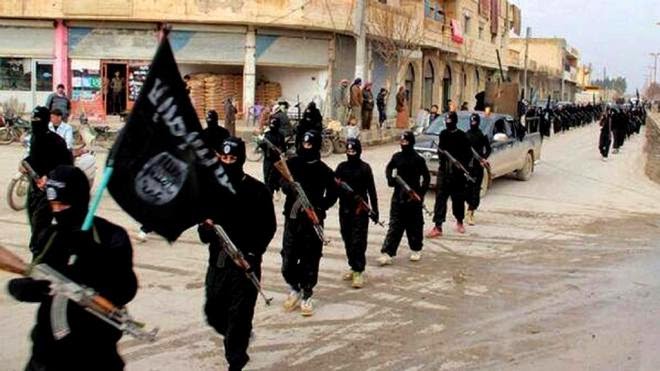
ISIS fighters marching in Raqqa, Syria. AP Photo/Militant Website File.
To most Muslims, and they are more than in the majority, those who commit acts of terror in the name of Islam are not really Muslim. They would distance themselves from extremists in their community, that too often, religious violence is not motivated by religion.
 
The Moro Islamic Liberation Front (MILF) has waged and continued the Moro’s armed resistance against colonization and in redress of their grievances against the central government in Manila. But it was never in the name of religion, or against the dominant Christian religion. There are other factions among the Muslim insurgents who might have used Islam as their inspiration but it is doubtful if their resistance was actually religiously- motivated.
 
Naturally, there are critics of religion who lack the ability to understand religion beyond its absolute and literal interpretations. They would comb the scriptures for examples of savagery and point to extreme patterns of religious bigotry, and to which they can generally ascribe the causes of oppression throughout the world.
 
This religious narrow-mindedness is what is fuelling the general antagonism to Islamic jihad, whether by the few Muslim extremists or the more peace-loving followers of Islam. It is the more heinous, radical and barbaric practices of extremists that get the attention of the news media and this type of coverage tends to band together all Muslims in a one-size-fits-all category. The barbarism of ISIS must be condemned but not to the extent of demonizing all Muslims in general.
 
It would be an unfortunate setback to the MILF and its government partners if the current debate on the proposed BBL is somehow hijacked by the horrors of Islamic extremism exemplified by ISIS. Already we are hearing murmurs on the side that if Congress fails to enact the BBL, it would have catastrophic consequences to the quest for lasting peace and could possibly swell the ranks of dissatisfied Muslim extremists in the South. That would be a great tragedy if the BBL is scuttled due to religious malice, not because of constitutional or other reasonable legal objections to the proposed law.
 
But first it should be clear to Congress that the proposed BBL does not aim to favour and put one religion over another. There should be a religious debate but not necessarily to determine why Islam should be accommodated. The purpose should be to address any misconceptions about Muslims in the South, that they are not the ISIS-garden variety. This exchange should not divide Muslims, Christians and other faith communities.
 
When that religious divide has been bridged, then the debate on the constitutional and other legal issues about the BBL should resume and it is best that these legal issues are settled without amending the Constitution.
 
The news media and the whole of social media should be involved in a robust and public debate on the merits of the BBL. A free and democratic exchange of opinions is important, not a railroading of the proposed BBL in Congress without serious deliberation, for after all both houses of Congress are controlled by the President’s political party that it might give the President and his rabid supporters the idea that a free debate is no longer necessary.
 
Scouring the news media and the various fora on the Internet, it is quite disheartening to notice the lack of a vibrant discussion on the BBL. Stories of the Binays’ alleged illegitimate wealth build-up seem to preoccupy the newspapers and discussions in social media. As the principal proponent of the BBL, President Aquino should be at the forefront of promoting it, but it seems he is either uninterested or simply confident that his majority in Congress will approve the proposed law no matter what.

Thursday, September 25, 2014

Bangsamoro hopes as ISIS looms


According to Mohager Iqbal, chairman of the Bangsamoro Transition Commission, enactment by Congress of the Bangsamoro Basic Law (BBL) would bring to a close the suffering of the Bangsamoro people, foster unity, bring about economic development and end radicalism among Muslims in the Southern Philippines.
 
Citing the recent Scottish referendum in which those against independence from Britain won and Scotland decided to remain under the Union Jack, Iqbal was also confident that the Bangsamoro entity would not rift the country apart but rather unify it. But this could be wishful thinking because at this stage, the new Bangsamoro state is still very much an elusive dream.

Supporters of the Comprehensive Agreement on the Bangsamoro show their
jubilation upon signing of the agreement between the Philippine government
and the MILF peace panels.
Even if the Aquino-controlled Congress could easily steamroll the enactment of the BBL, it is likely to face a constitutional challenge before the Supreme Court, and its ratification by the constituents of the Bangsamoro nation is not expected to be a sure thing. With the growing spectre of the Islamic State in the Middle East (ISIS or ISIL) reportedly having reached Southern Philippines, particularly among the more radical and disenchanted members of the Bangsamoro Islamic Freedom Fighters (BIFF) and the formerly Al Qaeda affiliate, Abu Sayyaf, the urgency of a Bangsamoro state looms even more urgent as the only peaceful alternative to a never-ending insurgency or to the establishment of a dreaded Islamic Caliphate in Mindanao.
 
There are constitutional landmines that the BBL needs to hurdle before Congress can enact the law. Assurances from the government panel that amending the Constitution is not necessary only appear to blindside the obvious constitutional questions. The new Bangsamoro entity envisaged under the BBL will clearly have a wide range of political powers not hitherto delegated or devolved to any other existing political subdivision like a province, city or town. The mere idea of forming a substate or a nation within a bigger nation is inconceivable because the Philippine Constitution does not allow it.
 
Pursuant to the mandate under the current Philippine Constitution, the Autonomous Region in Muslim Mindanao (ARMM) was created on August 1, 1989, through Republic Act No. 6734. The ARRM was officially inaugurated on November 6, 1990, in Cotabato City.
 
President Benigno Aquino III has said that the ARRM experiment was a complete failure because of corruption that plagued the new entity. In repealing the organic act that created the ARRM, the proposed BBL however goes beyond the framework of the current Constitution under Section 15.  For one, the BBL undermines the national sovereignty as well as the territorial integrity of the republic.
 
Although the BBL states that the Bangsamoro territory shall remain part of the Philippines, there are doubts however that it could be a preparation for ultimate secession from the republic. With a different government from the rest of the country based on the parliamentary system, exclusive and concurrent powers with the central government, and a shariah justice system for Muslims only, the BBL looks like a complete and comprehensive template not just for self-government, but for eventual independence.

Map showing the proposed new Bangsamoro territory.
Recall that the concept of a Bangsamoro nation is not the original creation of the peace panel that helped draft the Comprehensive Agreement on the Bangsamoro. Muslims or Moros in Mindanao have long believed they could not identify with the rest of the country, thinking that they do not belong. It has always been their claim that they were a sovereign people before colonization by Western powers, that their integration was forced upon them. It was this lost identity that led to the formation of the Mindanao Independence Movement in Cotabato in 1968, and later embraced by the Moro National Liberation Front (MNLF). This stirring for a separate nationhood is evident in the slogan of The Moro Islamic Liberation Front (MILF) that seceded from the MNLF and is now the major partner of the current administration for the enactment of the BBL: “We are Moros, not Filipinos.”

But if the BBL is the most viable non-violent alternative to Muslim self-determination in the south, then it should be laid out to the front so that the current Philippine Constitution could be appropriately amended to reflect that objective. The current text in the Constitution on the creation of autonomous regions in Muslim Mindanao is obviously insufficient to accommodate a Bangsamoro territory as envisaged by the BBL.
 
The problem with the current Aquino administration is its inability to stay within the parameters of the Constitution as evidenced by the pork barrel allocations and illegal transfers of government funds, and its lack of respect for equal protection under the law when apprehending perpetrators of corruption. The notion that the state can just suspend the fundamental rights of individuals by detaining them without trial reeks of injustice and offends the rule of law.
 
President Aquino and Congress should not cut corners in enacting a law that promises so much for our Muslim brothers in the south. In these crucial times when Western powers are being tested by a nascent and more extreme form of Muslim radicalism, one serious misstep like an error in constitutional judgment can foment and provoke choosing violence as the only available option for self-government.
 
The history of the Muslim struggle for self-government antedates the Philippines’ own independence movement against the Spanish and American colonizers. In the 1950s, the Kamlon uprising reminded us that the Moro rebellion has not been finished after the Philippines became independent from the United States in 1946. Beginning in the 1970s, secession had become the battlecry of the Moros of Mindanao. The MNLF waged a three-decade war against the central government until it accepted political autonomy under the 1996 peace agreement. But that didn’t last long and the MILF seceded from the MNLF which also spawned other disenchanted and more radical factions of the Muslim secessionist movement.
 
The Comprehensive Agreement on the Bangsamoro between the MILF and the present government probably has the best chance of achieving the lasting peace that has eluded all previous attempts toward a negotiated settlement of the Muslim problem. But if the government of President Aquino fails to deliver the Bangsamoro state to the MILF, what could be the last option for the Muslim rebels but embrace the more radical jihad of the Islamic State. They would seem better off to continue fighting for their own independence since that would ensure loyalty to their Islamic traditional beliefs, whether they follow the revivalist practices of Wahhabism espoused by Saudi Arabia or the extremism of Al Qaeda or of the ISIS.
 
Fixing the constitutional shortcomings of the BBL is not the only problem the government must do to satisfy the MILF. Conducting the plebiscite to get the ratification of the BBL is in itself a huge challenge. The proposed law is a voluminous text for the constituents of the Bangsamoro territory to digest and understand before they can make up their minds whether to ratify the law. The plebiscite is not just going to be like a referendum on sovereignty where a simple question that can be answered by a yes or no would suffice.
 
An example of a question which needs to be asked is how would the separability clause in the BBL be implemented in the event that some provisions of the BBL are rejected. How would that influence the entire law, or should it be allowed to stand despite some paragraphs being struck down?
 
If the constitutional objections to the BBL are cleaned up, the promise of the Bangsamoro state is an ambitious undertaking that could either break or make the Aquino administration. Previous presidents have failed, yet this current president who is perceived to be without a strong character but with the moral certitude bigger than the sum of his personality, could possibly emerge as a champion for the Muslim minority in the South if he knows how to play his cards correctly.